Seyed Masoud Hosseini · Overview · Study log · Weekly summaries · Ideas · Search · Transcript · RSS feed
Justice · Lecture 3 of 19 · 55:08
Lecture 3: Free to Choose
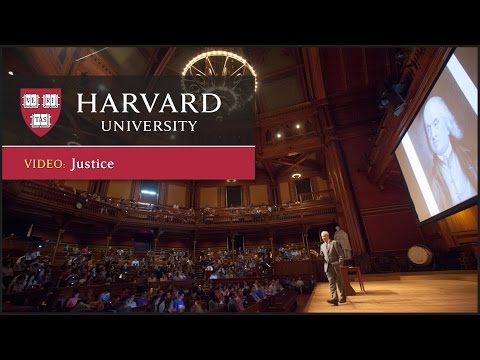
Study guide
What this lecture covers
Having examined utilitarianism, the course turns to libertarianism, a "strong rights" theory that treats individual liberty as close to absolute. The lecture explains what libertarians believe government should never do, then centers on a sustained class debate about whether redistributive taxation of the wealthy is a form of coercion.
After watching, you can list the three kinds of laws libertarians consider illegitimate, explain Robert Nozick's argument that taxation is akin to forced labor, and describe the idea of self-possession that underlies the libertarian case for a minimal state.
Key ideas
- Libertarianism: the view that the fundamental individual right is the right to liberty, because we are separate persons not available for use toward any collective purpose.
- The minimal state: libertarians permit only enough government to provide national defense, police, and courts to enforce contracts and property rights.
- No paternalist legislation: libertarians reject laws, such as seat-belt requirements, that protect people from themselves.
- No morals legislation: libertarians reject laws that enforce a particular vision of virtue, such as historical bans on gay and lesbian intimacy.
- No redistribution: libertarians treat taxation for redistribution as a form of coercion, since it takes earnings without full consent.
- Justice in acquisition and transfer: Nozick's two-part test for whether a distribution of wealth is just, based on how holdings were acquired and exchanged rather than on the resulting pattern.
- Taxation as forced labor: Nozick's argument that if the state may claim the fruits of your labor, it effectively claims a share of your labor and thus of you.
- Self-possession: the foundational libertarian premise that each person owns themselves, which grounds the objection to using anyone as a means to collective welfare.
Walkthrough
What libertarianism rules out (0:03)
Sandel defines libertarianism as a strong theory of rights: individuals are separate beings, not resources for the community to allocate. He lists three things libertarians say the modern state has no right to do: pass paternalist laws like seat-belt mandates, pass morals legislation such as historical laws against gay and lesbian intimacy, and redistribute wealth from rich to poor through taxation. A minimal "night-watchman" state limited to defense, police, and contract enforcement is the libertarian ideal.
Justice in holdings, and the case of Bill Gates (11:10)
Sandel explains that for libertarians, whether a distribution of wealth is just cannot be read off from the pattern alone; it depends on whether the initial holdings were acquired fairly and whether subsequent transfers were voluntary. He illustrates the scale of inequality with Bill Gates's net worth and Michael Jordan's earnings, then asks whether it would be just to tax them heavily to fund food, health care, or education for the poor.
Nozick: taxation as forced labor (21:25)
Students debate whether redistributive taxation is theft. Sandel presents Robert Nozick's argument: if the state has a right to take the earnings from your labor, that is morally equivalent to claiming a right to a portion of your labor itself, which is what forced labor means. This leads to the deeper premise underlying the whole libertarian position: the idea of self-possession, that each person is the sole owner of themselves.
Team Libertarian answers the objections (33:45)
Sandel invites three student volunteers to form "Team Libertarian" and respond live to objections raised in class: that the poor need the money more, that democratic taxation is not coercive because it is consented to collectively, and that the wealthy owe society a debt for their success. The team argues that need is different from desert, that majority rule does not override fundamental rights, and that successful people have already paid for the services of those who helped them.
Challenging self-possession (48:02)
A student, Victoria, challenges the premise itself: living in society means accepting limits on what you may do with yourself, so perhaps self-possession isn't absolute. Sandel closes by noting that if you reject the libertarian argument, you need a place in the chain of reasoning to break in, and previews that the course will next examine John Locke, from whom Nozick borrows the idea of self-ownership.
Before you watch
- Watch Lectures 1 and 2 first, since this session assumes familiarity with the consequentialist reasoning of utilitarianism that libertarianism is positioned against.
- Note that libertarianism here is a philosophical rights-based theory, not a specific political party platform.
Check your understanding
- What three types of government action do libertarians consider illegitimate, and why?
- How does Nozick's argument connect taxation to the concept of forced labor?
- What is the difference between justice in acquisition and justice in transfer, and why does it matter for judging whether a distribution of wealth is fair?
- What objection did Victoria raise against the idea of self-possession, and how might a libertarian respond?
Vocabulary
- libertarianism (noun)
- The political theory that individual liberty is the most important right and government should be very limited.
Libertarianism treats taxation for redistribution as coercive. - minimal state (noun)
- A government limited to only the most basic functions, like defense and law enforcement.
Libertarians support only a minimal state. - night-watchman state (noun)
- Another name for a minimal government that only protects citizens and enforces contracts.
The night-watchman state does nothing beyond defense and courts. - paternalist (adjective)
- Describing a law or action that protects people from themselves, limiting their own choices.
Seat-belt laws are an example of paternalist legislation. - legislation (noun)
- Laws that have been made by a governing body.
Libertarians reject morals legislation about private behavior. - redistribution (noun)
- The transfer of wealth or income from some people to others, often via taxes.
Redistribution taxes the rich to help the poor. - coercion (noun)
- The use of force or pressure to make someone do something.
Nozick claims taxation is a form of coercion. - acquisition (noun)
- The act of gaining or obtaining something.
Justice in acquisition asks whether property was gained fairly. - holdings (noun)
- Property or wealth that a person owns.
A just distribution of holdings depends on how they were acquired. - forced labor (noun)
- Work someone is compelled to do against their will.
Nozick compares taxation to forced labor. - self-possession (noun)
- The idea that a person owns themselves completely.
Self-possession is the foundational premise of libertarianism. - desert (moral) (noun)
- What a person deserves based on their effort or merit.
The team argues need is different from desert. - premise (noun)
- A basic assumption or starting point of an argument.
Self-possession is the key premise of the libertarian argument. - volunteer (adj.) (adjective)
- Done or given willingly, without being forced.
The volunteer student team argues for libertarianism. - majority rule (noun)
- The principle that decisions are made according to what most people want.
The team argues majority rule cannot override fundamental rights. - absolute (adjective)
- Complete and not limited in any way.
Victoria asks whether self-possession is truly absolute. - illegitimate (adjective)
- Not accepted as lawful or proper.
Libertarians see redistribution as an illegitimate use of state power. - grounds (reasons) (noun)
- The reasons or basis for a belief or action.
Team Libertarian answers objections on several grounds. - morally equivalent (phrase)
- The same in moral terms, even if the actions look different.
Nozick argues taxation is morally equivalent to forced labor. - override (verb)
- To use power or authority to set aside something else.
Majority rule cannot override fundamental rights, the team argues. - fundamental right (noun)
- A basic right considered essential and not to be taken away.
Libertarians defend fundamental rights against majority rule. - net worth (noun)
- The total value of what a person owns, minus what they owe.
Bill Gates's net worth illustrates the scale of inequality. - distribution (wealth) (noun)
- The way wealth or resources are shared among people.
Libertarians judge a distribution of wealth by how it was acquired.
Chapters
- 0:00 Introduction
- 0:35 Utilitarianism
- 2:03 Mills Defense
- 2:24 Why Justice
- 2:48 Exception
- 3:37 Objection
- 4:32 Worthier Pleasures
- 5:36 Strong Theories of Rights
- 6:06 Libertarianism
- 7:42 What Does Libertarianism Say
- 9:09 No Morals Legislation
- 10:14 No Taxation
- 12:01 Two Principles
- 13:37 Bill Gates
- 14:13 Microsoft
- 15:56 Utilitarians
- 17:04 Michael Jordan
- 17:52 redistribution is wrong
- 18:28 Michael Jordan and redistribution
- 19:54 Is it theft
- 20:37 Is it redistribution
- 22:16 Is it taxation
- 24:56 The Fundamental Principle
- 26:34 The Stakes Are High
- 27:22 Self Possession
- 27:52 The Minimal State
- 35:10 Objections
- 36:20 The poor need the money
- 37:14 Need vs deserving
- 38:52 Property rights
- 39:57 Democracy
- 40:51 Alice Alex
- 43:36 Anna Anna
- 50:00 Conclusion
From the YouTube description
To register for the 2015 course, visit https://www.edx.org/course/justice-harvardx-er22-1x-0.
ART ONE: FREE TO CHOOSE
Sandel introduces the libertarian conception of individual rights, according to which only a minimal state is justified. Libertarians argue that government shouldnt have the power to enact laws that 1) protect people from themselves, such as seat belt laws, 2) impose some peoples moral values on society as a whole, or 3) redistribute income from the rich to the poor. Sandel explains the libertarian notion that redistributive taxation is akin to forced labor with references to Bill Gates and Michael Jordan.
PART TWO: WHO OWNS ME?
Libertarian philosopher Robert Nozick makes the case that taxing the wealthy—to pay for housing, health care, and education for the poor—is a form of coercion. Students first discuss the arguments behind redistributive taxation. Dont most poor people need the social services they receive in order to survive? If you live in a society that has a system of progressive taxation, arent you obligated to pay your taxes? Dont many rich people often acquire their wealth through sheer luck or family fortune? A group of students dubbed Team Libertarian volunteers to defend the libertarian philosophy against these objections.
← Lecture 2: Putting a Price Tag on Life · Lecture 4: This Land Is My Land →