Seyed Masoud Hosseini · Overview · Study log · Weekly summaries · Ideas · Search · Transcript · RSS feed
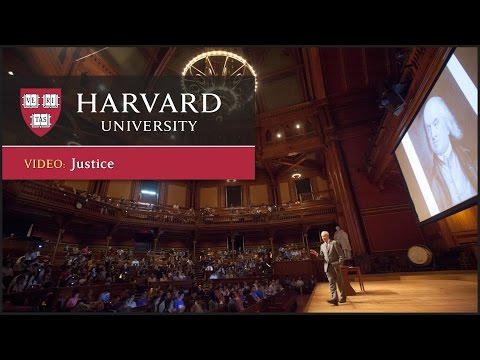
Justice · Lecture 4 of 19 · 54:58
Lecture 4: This Land Is My Land
Study guide
What this lecture covers
The course turns to John Locke, who argues that individuals hold natural rights to life, liberty, and property even before any government exists. This lecture explains Locke's state of nature, his account of how private property can arise without anyone's consent, and his theory that legitimate government rests on the consent of the governed.
After watching, you can explain why Locke calls certain rights unalienable, describe his labor-mixing theory of property, and identify where Locke's view aligns with libertarianism and where it diverges from it.
Key ideas
- State of nature: Locke's hypothetical condition of free and equal individuals before government or law exists, governed only by a law of nature.
- Law of nature: even in the state of nature, individuals may not harm another's life, liberty, or property, and may not give up their own.
- Unalienable rights: rights to life, liberty, and property that are so fully ours that even we cannot trade or give them away, unlike an ordinary possession.
- Labor-mixing theory of property: Locke argues that mixing one's labor with unowned things, such as land or gathered fruit, makes them one's property, provided enough and as good is left for others.
- Natural versus conventional property: property rights exist before government, but government still defines and enforces what counts as property.
- Consent and political obligation: Locke holds that legitimate government requires the consent of the governed, distinguishing him from a divine-right or purely coercive theory of the state.
- The Native American land debate: a class discussion about whether Locke's property theory doubles as a justification for colonial land seizure.
Walkthrough
Rights in the state of nature (0:04)
Sandel introduces Locke as a potential ally of libertarianism: he believes in fundamental rights to life, liberty, and property that no government, however democratic, can override. These rights exist prior to government, in what Locke calls the state of nature, a condition of freedom and equality nonetheless bound by a law of nature that forbids taking your own or anyone else's life, liberty, or property.
Unalienable rights (6:10)
Sandel explains the paradox of unalienable rights: a right to something you cannot sell or transfer, unlike a normal possession. He connects this to Thomas Jefferson's use of Locke's language in the Declaration of Independence, and notes that this feature actually separates Locke from strict libertarianism, since a full self-owner should be able to dispose of their rights however they wish.
Property through labor (8:17)
Locke's central argument: each person owns their own labor, and mixing that labor with unowned resources, such as land one clears and cultivates, makes those resources one's property, as long as there is enough and as good left for others. Sandel connects this ancient argument to a modern parallel, the dispute between rich and poor countries over drug patents during the AIDS crisis in South Africa.
Does Locke's theory justify colonization? (15:26)
Students debate whether Locke's labor-mixing argument, which privileges enclosed and cultivated land, effectively justifies European settlers taking land from Native Americans who did not enclose it in the same way. Some argue the theory is a rationalization for dispossession; others point out that Locke's own text limits acquisition to cases with enough left for others, and that hunter-gatherer use of land might itself count as a form of property under Locke's logic.
From natural property to government by consent (25:39)
Sandel shifts to Locke's second major idea: legitimate government arises from consent, because the state of nature has real inconveniences, chiefly that everyone must enforce the law of nature for themselves, leading to excess and instability. Leaving the state of nature means agreeing to accept the decisions of the majority, but that majority still cannot violate the unalienable rights that never disappear.
Implied consent and its limits (41:06)
The lecture closes on the puzzle of consent for those born into an existing society who never explicitly signed on. Sandel and students discuss Locke's idea of implied consent through using government services, and a student, Nicola, pushes back on whether using public roads really implies agreement to the government's authority, including obligations like paying taxes or being conscripted.
Before you watch
- Watch Lecture 3 on libertarianism first, since this session repeatedly compares Locke's views to the libertarian position.
- Keep Nozick's idea of self-possession in mind, since Locke's labor theory of property is its historical source.
Check your understanding
- Why does Locke call rights to life, liberty, and property "unalienable," and how does that differ from ordinary ownership?
- How does mixing one's labor with something unowned create a property right, according to Locke?
- What objection did students raise about whether Locke's theory justifies the appropriation of Native American land?
- What is the difference between "implied consent" and an explicit agreement to be governed, and why does it matter for political obligation?
Vocabulary
- state of nature (noun)
- A hypothetical condition of people living freely before any government exists.
Locke imagines a state of nature governed only by natural law. - law of nature (noun)
- A moral rule Locke believed applies to everyone even without government.
The law of nature forbids harming another's life or property. - unalienable (adjective)
- Impossible to give away or transfer, even by the owner's own choice.
Locke calls life, liberty, and property unalienable rights. - labor-mixing theory (noun)
- Locke's idea that working on unowned resources makes them your property.
The labor-mixing theory explains how land becomes private property. - cultivate (verb)
- To prepare and use land for growing crops.
A farmer who cultivates unclaimed land may come to own it. - conventional (adjective)
- Based on agreement or common practice, not on nature alone.
Government defines conventional property rules on top of natural ones. - consent of the governed (noun)
- The idea that a government's authority comes from the agreement of the people it rules.
Locke argues legitimate government requires the consent of the governed. - dispossession (noun)
- The act of taking property or land away from someone.
Some argue Locke's theory rationalizes the dispossession of Native Americans. - enclose (verb)
- To surround an area of land with a fence or boundary, marking it as owned.
Locke's theory favors land that settlers enclosed and farmed. - hunter-gatherer (noun)
- A person or society that lives by hunting animals and gathering wild food rather than farming.
Hunter-gatherer use of land didn't fit the European idea of property. - rationalization (noun)
- A false or self-serving explanation used to justify something.
Critics call Locke's theory a rationalization for land seizure. - instability (noun)
- A lack of stability or firmness, here meaning disorder.
The state of nature suffers from instability without shared enforcement. - implied consent (noun)
- Agreement that is assumed from someone's actions rather than stated directly.
Using public roads is treated as a form of implied consent. - conscript (verb)
- To force someone to join military service.
Citizens can be conscripted even without explicit consent to government. - obligation (noun)
- A duty to do something, often required by law or morality.
Political obligation raises the question of why citizens must obey laws. - paradox (noun)
- A statement or situation that seems to contradict itself.
Unalienable rights create a paradox: rights you cannot even give away. - ally (noun)
- A person or idea that supports the same side or cause.
Sandel introduces Locke as a potential ally of libertarianism. - override (verb)
- To use power to cancel or set aside something else.
No government can override certain natural rights, Locke argues. - prior to (phrase)
- Existing or happening before something else.
Locke's rights exist prior to any government. - excess (noun)
- An amount beyond what is reasonable or needed.
The state of nature can lead to excess without shared enforcement. - puzzle (philosophical) (noun)
- A difficult question or problem to be worked out.
The lecture closes on the puzzle of implied consent. - push back (phrasal verb)
- To resist or disagree with an idea.
A student pushes back on the idea of implied consent. - patent (noun)
- A legal right giving someone exclusive control over an invention.
The drug patent dispute echoes Locke's property arguments.
Chapters
- 0:00 Intro
- 0:38 John Locke
- 2:38 The State of Nature
- 4:35 Lockes Answer
- 7:36 Unalienable Rights
- 12:53 Intellectual Property Rights
- 16:01 Lockes Private Property
- 25:12 Next Time
- 31:55 Consent
- 41:15 Implied Consent
- 44:57 Stand Up
From the YouTube description
To register for the 2015 course, visit https://www.edx.org/course/justice-harvardx-er22-1x-0.
PART ONE: THIS LAND IS MY LAND
The philosopher John Locke believes that individuals have certain rights so fundamental that no government can ever take them away. These rights—to life, liberty and property—were given to us as human beings in the the state of nature, a time before government and laws were created. According to Locke, our natural rights are governed by the law of nature, known by reason, which says that we can neither give them up nor take them away from anyone else. Sandel wraps up the lecture by raising a question: what happens to our natural rights once we enter society and consent to a system of laws?
PART TWO: CONSENTING ADULTS
If we all have unalienable rights to life, liberty, and property, how can a government enforce tax laws passed by the representatives of a mere majority? Doesnt that amount to taking some peoples property without their consent? Lockes response is that we give our tacit consent to obey the tax laws passed by a majority when we choose to live in a society. Therefore, taxation is legitimate and compatible with individual rights, as long as it applies to everyone and does not arbitrarily single anyone out.