Seyed Masoud Hosseini · Overview · Study log · Weekly summaries · Ideas · Search · Transcript · RSS feed
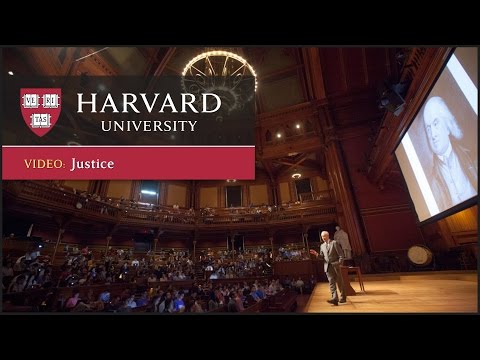
Justice · Lecture 2 of 19 · 55:10
Lecture 2: Putting a Price Tag on Life
Study guide
What this lecture covers
Building on the trolley and cabin-boy cases from the previous lecture, this session examines Jeremy Bentham's utilitarianism in practice, through real cost-benefit analyses that place a dollar value on human life, and then turns to John Stuart Mill's attempt to defend utilitarianism against its critics.
After watching, you can state Bentham's principle of utility in your own words, explain two standard objections to utilitarianism (minority rights and the commensurability of values), and describe Mill's proposed test for distinguishing higher from lower pleasures.
Key ideas
- Principle of utility: Bentham's claim that the right action, for individuals and legislators alike, is the one that maximizes the balance of pleasure over pain.
- Cost-benefit analysis: the modern, everyday application of utilitarian logic, used by companies and governments to weigh policies in monetary terms.
- The value-of-life objection: assigning a dollar figure to a human life, as in the Ford Pinto case, can produce results that feel morally repugnant even when the arithmetic is consistent.
- The minority-rights objection: aggregating preferences for "the greatest good for the greatest number" can run over the rights or interests of a minority.
- Commensurability of values: utilitarianism assumes all goods can be measured on a single scale, an assumption Sandel probes with Edward Thorndike's 1930s survey of what people would pay to avoid unpleasant experiences.
- Higher versus lower pleasures: Mill's attempt to show that utilitarianism can rank pleasures qualitatively, not just by intensity and duration.
- Mill's test: a pleasure is higher if people who have experienced both it and a lower alternative consistently prefer it.
Walkthrough
Bentham's utility principle and cost-benefit analysis (0:03)
Sandel recaps Bentham's core idea: morality means maximizing the collective balance of pleasure over pain, summed across everyone affected. He introduces cost-benefit analysis as this logic applied by governments and firms, then presents a real study Philip Morris commissioned in the Czech Republic showing a net public-finance "gain" from smoking due to reduced pension and healthcare costs from early deaths.
The Ford Pinto case (6:17)
Sandel walks through the well-known Ford Pinto lawsuit, in which internal documents showed Ford had calculated that fixing a dangerous fuel-tank defect would cost more than paying for the deaths and injuries it would cause, valuing each death at roughly $200,000. Students debate whether the flaw was assigning too low a number, or whether any dollar figure on a life is illegitimate, extending the discussion to cell-phone-related driving deaths.
Objections to utilitarianism (15:30)
The class raises two broad objections. First, utilitarianism may fail to respect the rights of a minority, since aggregating preferences can justify severe harm to a few if it produces enough happiness for the many; Sandel sharpens this with the example of Christians thrown to lions for Roman entertainment. Second, he questions whether all values can be reduced to a single measure, illustrating this with Thorndike's survey asking Depression-era subjects what payment would compensate them for pulling a tooth, eating a worm, or living in Kansas.
Mill's defense and higher pleasures (33:58)
Sandel introduces John Stuart Mill, a child prodigy raised by his utilitarian father, who tried to humanize Bentham's theory. Mill insists utility remains the sole standard of morality but argues a utilitarian can still distinguish higher from lower pleasures: a pleasure is higher if people who have experienced both prefer it, without any external moral standard imposed on them.
Testing Mill's claim with Shakespeare and the Simpsons (38:06)
Sandel runs a live experiment, playing clips of a Hamlet soliloquy, the reality show Fear Factor, and The Simpsons, then polling which students enjoyed most and which they considered the worthiest experience. Most prefer watching The Simpsons yet still rank Shakespeare as higher, a split that becomes the class's test case for whether Mill's preference-based account of higher pleasures actually works, or whether it smuggles in a standard of worth that goes beyond mere preference.
Before you watch
- Watch Lecture 1 first, since this session assumes you already know the distinction between consequentialist and categorical moral reasoning.
- Keep Bentham's basic formula, maximizing pleasure over pain, in mind before the cost-benefit examples begin.
Check your understanding
- What made the Philip Morris and Ford Pinto cost-benefit analyses controversial from a utilitarian standpoint?
- How does the objection about minority rights challenge the idea of "the greatest good for the greatest number"?
- What did Thorndike's survey suggest about whether all values can be measured on one scale?
- According to Mill, what makes a pleasure "higher" rather than merely more intense or longer-lasting?
- Why does the Shakespeare-versus-Simpsons experiment create a problem for Mill's test?
Vocabulary
- principle of utility (noun)
- Bentham's idea that the right action maximizes overall pleasure over pain.
The principle of utility guides Bentham's ethical theory. - cost-benefit analysis (noun)
- A method of comparing the costs and benefits of a decision, often in money.
Governments use cost-benefit analysis to evaluate policies. - aggregate (verb)
- To combine many separate things into one total.
Utilitarianism aggregates everyone's pleasure and pain into one sum. - repugnant (adjective)
- Causing strong dislike or disgust.
Putting a dollar value on a life can feel morally repugnant. - minority rights (noun)
- The protections owed to a smaller group even against the wishes of the majority.
Utilitarianism may not respect minority rights if it maximizes total happiness. - commensurable (adjective)
- Able to be measured or compared using the same scale.
Utilitarianism assumes all values are commensurable. - defect (noun)
- A flaw or fault in something, especially a product.
Ford knew about a dangerous fuel-tank defect. - lawsuit (noun)
- A legal case brought to a court by one party against another.
The Ford Pinto lawsuit revealed the company's internal cost calculations. - illegitimate (adjective)
- Not accepted as fair, lawful, or proper.
Some argue putting any price on life is illegitimate. - prodigy (noun)
- A young person with extraordinary talent or ability.
Mill was a child prodigy raised by his utilitarian father. - humanize (verb)
- To make something more compassionate or considerate of human feelings.
Mill tried to humanize Bentham's strict utilitarian theory. - qualitative (adjective)
- Relating to quality or kind, rather than to amount or number.
Mill wanted to rank pleasures qualitatively, not just by intensity. - soliloquy (noun)
- A speech in a play where a character speaks their thoughts aloud, alone.
Sandel plays a Hamlet soliloquy for the class. - smuggle in (phrasal verb)
- To secretly include something without stating it openly.
Mill's theory may smuggle in a standard of worth beyond mere preference. - net worth (noun)
- The total value of what a person owns minus what they owe.
Sandel discusses the survey's implications for public finance decisions. - pension (noun)
- Regular payments made to people after they retire from work.
The study linked smoking deaths to reduced pension costs. - objection (noun)
- A reason given against an idea or claim.
The class raised two major objections to utilitarianism. - standard of worth (noun)
- A measure used to judge how valuable or important something is.
Ranking Shakespeare above The Simpsons may require an external standard of worth. - recap (verb)
- To briefly summarize what was said before.
Sandel recaps Bentham's core idea at the start of the lecture. - collective (adjective)
- Shared by, or involving, everyone in a group.
Utilitarianism sums the collective balance of pleasure over pain. - commission (a study) (verb)
- To officially request and pay for a piece of research or work.
Philip Morris commissioned a study on smoking's public costs. - net gain (noun)
- The overall benefit remaining after subtracting costs.
The study claimed a net gain to public finances from smoking. - flaw (noun)
- A weakness or mistake in something.
Students debate whether the flaw was the dollar figure itself. - extend (a discussion) (verb)
- To broaden a topic to cover more examples.
The discussion extends to cell-phone-related driving deaths. - compensate (verb)
- To give something, often money, to make up for a loss or harm.
The survey asks what payment would compensate for discomfort.
Chapters
- 0:00 <Untitled Chapter 1>
- 5:28 PHILLIP MORRIS STUDY
- 8:02 REPAIRING THE FORD PINTO
- 29:43 OBJECTIONS TO UTILITARIANISM
From the YouTube description
To register for the 2015 course, visit https://www.edx.org/course/justice-harvardx-er22-1x-0.
PART ONE: PUTTING A PRICE TAG ON LIFE
Today, companies and governments often use Jeremy Benthams utilitarian logic under the name of cost-benefit analysis. Sandel presents some contemporary cases in which cost-benefit analysis was used to put a dollar value on human life. The cases give rise to several objections to the utilitarian logic of seeking the greatest good for the greatest number. Should we always give more weight to the happiness of a majority, even if the majority is cruel or ignoble? Is it possible to sum up and compare all values using a common measure like money?
PART TWO: HOW TO MEASURE PLEASURE
Sandel introduces J.S. Mill, a utilitarian philosopher who attempts to defend utilitarianism against the objections raised by critics of the doctrine. Mill argues that seeking the greatest good for the greatest number is compatible with protecting individual rights, and that utilitarianism can make room for a distinction between higher and lower pleasures. Mills idea is that the higher pleasure is always the pleasure preferred by a well-informed majority. Sandel tests this theory by playing video clips from three very different forms of entertainment: Shakespeares Hamlet, the reality show Fear Factor, and The Simpsons. Students debate which experience provides the higher pleasure, and whether Mills defense of utilitarianism is successful.
← Lecture 1: The Moral Side of Murder · Lecture 3: Free to Choose →