Seyed Masoud Hosseini · Overview · Study log · Weekly summaries · Ideas · Search · Transcript · RSS feed
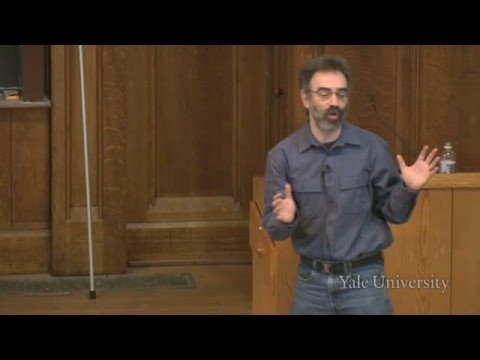
Death · Lecture 3 of 26 · 45:48
Lecture 3: Arguments for the Existence of the Soul, Part I
Study guide
What this lecture covers
This lecture develops the physicalist position introduced previously and then begins testing whether there is any good reason to believe in a soul at all. It explains what physicalists mean when they say a person is 'just a body' and introduces the general method, inference to the best explanation, that any argument for the soul has to use, since souls cannot be observed directly.
By the end, you should understand what a P-functioning body is, why the physicalist mind is not simply the brain, and be able to evaluate two early candidate arguments for the soul: that a soul is needed to explain bodily animation, and that it is needed to explain thought and reasoning.
Key ideas
- P-functioning body: the physicalist's person is not just any body but one able to perform person-making abilities (P abilities) such as thinking, communicating and planning.
- Mind is not the brain: physicalists treat talk of 'the mind' as shorthand for the body's P-functioning abilities, similar to how a smile is not an extra object but a way of talking about what lips and muscles do.
- Inference to the best explanation: we're justified in believing in unobservable things, like atoms or germs, when positing them gives the best available explanation of something we already accept, not merely any explanation.
- Reserved terminology: Kagan reserves 'soul' specifically for the dualist's immaterial mind, while 'mind' stays neutral between dualist and physicalist views.
- Animation argument fails: the claim that a soul is needed to explain why living bodies move (unlike corpses) is answered by comparing the body to a machine whose parts have simply stopped working together.
- Purposeful-movement argument fails: appealing to guided missiles and robots, the physicalist argues that purposeful, non-random behavior doesn't require anything beyond physical control systems like a CPU.
- Reasoning argument weakened by computers: a chess-playing computer can be described as having beliefs, desires and strategies without needing anything nonphysical, undercutting the claim that thought alone proves a soul exists.
Walkthrough
Defining the P-functioning body (0:00)
Kagan completes the account of physicalism: a person is a body capable of the P abilities. He distinguishes this from a mere corpse, which has the same physical parts but has lost that functioning.
The mind is not the brain (6:12)
He clarifies that physicalists don't deny minds exist; they just treat the mind as a way of describing the body's functioning rather than as an extra object like the brain. Death, on this view, is the breakdown of that functioning, comparable to a broken stereo.
Inference to the best explanation (13:20)
Since souls can't be observed with the senses, any argument for their existence has to infer them from what they would explain. Kagan walks through the general pattern using atoms, x-rays and germs versus demons as examples, stressing that the winning explanation must be the best one available, not merely a possible one.
Feature F: what would a soul explain? (20:38)
The lecture frames the search for arguments as looking for some feature F of people that physicalism cannot explain, or explains poorly, while dualism explains well. Kagan previews that he will work through several candidates for F and give his physicalist responses to each.
Testing animation and purposeful movement (24:44)
The first candidate feature is the animation of living bodies versus corpses. Kagan argues a broken stereo analogy handles this without a soul. A refined version claims purposeful movement needs a soul, which he answers with the heat-seeking missile and robot examples, though he notes the dualist can push back by asking where a robot's instructions ultimately come from.
Testing thought and reasoning (35:59)
The next candidate is the human capacity for belief, desire and reasoning. Kagan uses a chess-playing computer to show that we readily describe purely physical systems as having beliefs and goals, weakening the claim that reasoning alone requires a soul. He ends by narrowing the argument toward emotion, setting up the next lecture's question of whether a purely physical being could feel.
Before you watch
- This lecture continues directly from Lecture 2's introduction of dualism and physicalism; watch that first if you haven't.
- Recall the P-functioning body concept, since it underlies the physicalist responses given here.
Check your understanding
- Why do physicalists say the mind is not identical to the brain?
- What makes an argument an 'inference to the best explanation' rather than just an inference to a possible explanation?
- How does the broken-stereo analogy answer the claim that a soul is needed to explain why living bodies are animated and corpses are not?
- Why does the existence of chess-playing computers complicate the argument that reasoning proves the existence of a soul?
Vocabulary
- physicalist (noun)
- A person who holds that everything, including people, is entirely physical.
A physicalist says the mind is just how the body functions. - person-making ability (noun)
- A capability, like thinking or planning, that makes something count as a person.
Person-making abilities distinguish a living body from a corpse. - shorthand (noun)
- A simple way of referring to something more complex.
Talk of the mind is shorthand for what the body does. - inference to the best explanation (noun)
- A method of reasoning that accepts the explanation that best accounts for the evidence.
Believing in atoms rests on inference to the best explanation. - unobservable (adjective)
- Not able to be directly seen or detected by the senses.
Souls are unobservable, unlike ordinary physical objects. - candidate (noun)
- Something being considered as a possible option.
Animation is one candidate argument for a soul. - animation (noun)
- The quality of being alive and able to move.
The animation argument claims a soul explains why bodies move. - corpse (noun)
- A dead body.
A corpse no longer has the P-functioning abilities. - purposeful (adjective)
- Done with a clear goal or intention.
Purposeful movement doesn't require a soul, physicalists argue. - guided missile (noun)
- A weapon that can steer itself toward a target using a control system.
A guided missile shows purposeful behavior without a soul. - undercut (verb)
- To weaken an argument or claim.
Chess computers undercut the reasoning argument for a soul. - reserved (terminology) (adjective)
- Set aside to be used only in a specific, defined way.
Kagan keeps 'soul' as reserved terminology for the dualist's mind. - sensation (noun)
- A physical feeling detected through the senses.
Physicalists say sensations come from the body. - philosophical method (noun)
- A systematic way of reasoning about deep questions.
Inference to the best explanation is a common philosophical method. - strategy (noun)
- A plan for achieving a goal.
A chess program can be described as having a strategy. - demon (noun)
- An imagined evil supernatural being, used here as an example explanation.
Demons and germs are compared as competing explanations. - candidate feature (noun)
- A trait proposed as possible evidence for an argument.
Animation is one candidate feature that might require a soul. - narrow (an argument) (verb)
- To make an argument more specific or focused.
Kagan narrows the argument toward emotion. - CPU (noun)
- The central processing unit, the part of a computer that carries out instructions.
A robot control system relies on a CPU. - chess-playing computer (noun)
- A computer program designed to play chess at a high level.
A chess-playing computer can be said to have goals.
Chapters
- 0:00 Chapter 1. Introduction: The P-Functioning Body
- 3:02 Chapter 2. The Mind According to Physicalists and Dualists
- 12:17 Chapter 3. Inferencing to the Best Explanation to Prove the Soul's Existence
- 19:55 Chapter 4. Can Only the Soul Justify Feature F?
- 35:07 Chapter 5. Abilities, Desires, Emotions -- Candidates for Feature F
From the YouTube description
Death (PHIL 176)
The lecture focuses on arguments that might be offered as proof for the existence of the soul. The first series of arguments discussed is those known as "inferences to the best explanation." That is, we posit the existence of things we cannot see so as to explain something else that is generally agreed to take place.
00:00 - Chapter 1. Introduction: The P-Functioning Body
03:02 - Chapter 2. The Mind According to Physicalists and Dualists
12:17 - Chapter 3. Inferencing to the Best Explanation to Prove the Soul's Existence
19:55 - Chapter 4. Can Only the Soul Justify Feature F?
35:07 - Chapter 5. Abilities, Desires, Emotions -- Candidates for Feature F
This course was recorded in Spring 2007.
← Lecture 2: The Nature of Persons: Dualism vs. Physicalism · Lecture 4: Plato's Phaedo Introduction; Arguments for the Soul, Part II →