Seyed Masoud Hosseini · Overview · Study log · Weekly summaries · Ideas · Search · Transcript · RSS feed
General Philosophy · Lecture 25 of 33 · 16:37
6.4 Making Sense of Perception
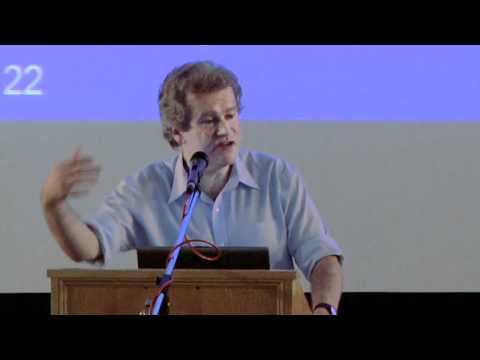
Study guide
What this lecture covers
This lecture closes the unit on perception by asking how, if we only ever have direct access to our own ideas or sense data, we can be entitled to believe there are mind-independent physical objects behind them. It works through Locke's indirect realism, a common misreading of it as trapping us behind a 'veil of ideas', and two rival twentieth-century responses: phenomenalism and the direct realism of Austin and Strawson.
By the end, you should be able to distinguish indirect from direct realism, explain the 'unacceptable interpretation' of ideas that Millican rejects, and describe how Hume's problem about the perception-object link resurfaces in each proposed solution.
Key ideas
- Indirect realism: Locke's view that we are directly aware of ideas in the mind and infer that a material object causes them, which raises the veil of perception problem: how do we know there is really an object behind the veil?
- The unacceptable interpretation: the mistaken picture of perception as a homunculus inside the head looking at a mental screen; this explains nothing, since it just relocates the problem of seeing a tree to the problem of seeing an image of a tree.
- Sense data: the twentieth-century term for how objects appear to us; better understood as awareness that counts as perception of an external object, not as an intermediate object that is itself perceived.
- Hume's challenge: because we are only ever acquainted with our own perceptions, experience can never establish a causal connection between perceptions and the external objects supposed to cause them.
- Phenomenalism: the view that statements about physical objects can be translated into statements about what sense data we would experience under certain conditions, aiming to sidestep the question of objects existing behind perceptions.
- Direct realism: the Austin/Strawson view that we perceive objects themselves, not ideas of them; it defeats the unacceptable interpretation but does not by itself answer the sceptic about whether a tree is really there.
- Ideas as intentional objects: a revised, less picture-like way of understanding a Lockean idea, as capturing what it is like to perceive an object rather than as a little image of it.
- Justifying belief in objects: the lecture's positive proposal is that we are entitled to believe in external objects because attributing causal, broadly structural properties to them lets us predict our future perceptions reliably.
Walkthrough
Indirect realism and the veil of perception (0:10)
Locke's indirect realism holds that perceiving a tree means being directly aware of an idea in the mind, caused by a material object. This raises the question of how we can know there is really an object behind the 'veil' of our ideas, and whether this traps us within our own mental states.
Rejecting the unacceptable interpretation (1:12)
Millican dismantles a parody of indirect realism in which a homunculus inside the head looks at a mental screen showing an image of the tree. This explains nothing, since it just replaces the problem of perceiving the tree with the problem of perceiving the image. The puzzle of why we do not see things upside down, despite the inverted retinal image, dissolves once this picture is dropped, and the same caution applies to talk of 'sense data': a sense datum should be understood as the way an object appears, not a further thing that must itself be perceived.
Hume's problem and phenomenalism (3:12)
Hume argues that since we are only ever aware of our own perceptions, we can never experience the causal link between perceptions and the external objects supposed to produce them, so the connection has no foundation in reasoning. Phenomenalism responds by treating statements about physical objects as statements about the sense data we would perceive under certain conditions, trying to sidestep the question of what lies behind perception. The lecture notes that phenomenalism still faces a version of the problem of induction, since it must assume that predicted future perceptions will actually occur, and that this approach fell out of favor after being popular in the mid-twentieth century.
Direct realism and its limits (8:20)
Austin and Strawson's direct realism insists we perceive objects themselves, not ideas of them, which correctly rules out the unacceptable interpretation: when you look at a tree, it is the tree you see, not an image of one. But this does not defeat the sceptic, who can still ask how you know your experience is actually caused by a tree rather than, say, being a brain in a vat. Direct realism, the lecture argues, gives a verbal solution rather than a genuine one.
Rehabilitating indirect realism (11:25)
The lecture proposes returning to a Lockean position, but reinterpreting an 'idea' not as a mental image, but as an intentional object: what it is like to perceive a tree, distinguishable in principle from the tree's actual existence. This keeps the logical possibility of hallucination or being a brain in a vat open without collapsing into the unacceptable interpretation.
Justifying belief in external objects (13:28)
To answer Hume's challenge, the lecture argues we are entitled to believe in external objects because attributing causal properties to them, transmitted through mechanisms like light and sound waves, lets us successfully predict future perceptions. We can give up the earlier assumption that these real properties must resemble our ideas, and accept explanations in terms of things like charge and spin, while still treating predictive success as good evidence that something like our conception of objects really exists.
Before you watch
- Watch the earlier lectures in this unit on primary and secondary qualities, since this lecture assumes familiarity with Locke's account of ideas and qualities.
- Recall Hume's argument about causal connections and experience, discussed elsewhere in the course.
Check your understanding
- What is the veil of perception problem, and why does indirect realism raise it?
- Explain the 'unacceptable interpretation' of perception and why Millican rejects it.
- How does phenomenalism try to answer Hume's challenge, and what problem does it still face?
- Why does direct realism fail to defeat the sceptic, even though it avoids the unacceptable interpretation?
- How does the lecture propose we justify belief in external objects, given Hume's challenge?
Vocabulary
- indirect realism (noun)
- The view that we directly perceive ideas or sense data, and only indirectly infer the existence of real objects.
Locke's indirect realism says objects cause our ideas. - veil of perception (noun)
- The problem of being unable to check whether our ideas truly match a real object behind them.
The veil of perception problem asks how we know objects are really there. - homunculus (noun)
- An imagined tiny person inside the head, used to criticize flawed theories of perception.
The homunculus picture explains nothing about how we really see. - sense data (noun)
- The immediate way things appear to us in perception.
Sense data describes how an object looks to an observer. - acquainted (with) (adjective)
- Having direct, firsthand experience of something.
We are only ever acquainted with our own perceptions, Hume argues. - phenomenalism (noun)
- The view that statements about objects can be translated into statements about possible sense experiences.
Phenomenalism tries to avoid asking what lies behind perception. - direct realism (noun)
- The view that we perceive physical objects themselves, not mental representations of them.
Direct realism says we see the tree itself, not an image of it. - intentional object (noun)
- What a thought or perception is about or directed at, regardless of whether it really exists.
An idea can be understood as an intentional object of perception. - hallucination (noun)
- A perception of something that isn't really there.
The theory must leave room for the possibility of hallucination. - entitled (to believe) (adjective)
- Having a reasonable right or justification for holding a belief.
We are entitled to believe in external objects based on predictive success. - predictive success (phrase)
- The track record of a theory or belief accurately forecasting future outcomes.
Predictive success is offered as evidence for believing in real objects. - sidestep (verb)
- To avoid dealing with a difficult problem directly.
Phenomenalism tries to sidestep the question of what's behind perception. - dismantle (an argument) (verb)
- To take apart and show the weaknesses of an argument.
Millican dismantles the unacceptable interpretation. - relocate (a problem) (verb)
- To move a problem to a different place without actually solving it.
The homunculus picture just relocates the problem. - inverted (adjective)
- Turned upside down or reversed.
The retinal image is inverted, yet we don't see things upside down. - fall out of favor (phrase)
- To become less popular or accepted over time.
Phenomenalism fell out of favor after mid-century popularity. - verbal (solution) (adjective)
- Concerning only the wording of a problem, not its real substance.
Direct realism gives a verbal solution rather than a genuine one. - rehabilitate (verb)
- To restore a theory's reputation by fixing its problems.
The lecture tries to rehabilitate indirect realism. - rival (theory) (adjective)
- Competing with another theory for acceptance.
Phenomenalism and direct realism are rival theories. - entitlement (noun)
- The right or justification to believe or claim something.
The lecture argues for our entitlement to believe in objects.
From the YouTube description
A series of lectures delivered by Peter Millican to first-year philosophy students at the University of Oxford. The lectures comprise the 8-week General Philosophy course and were delivered in late 2009.
Slides can be found here:
http://podcasts.ox.ac.uk/series/general-philosophy
← 6.3 Abstraction and Idealism · 7.1 Free Will, Determinism and Choice →