Seyed Masoud Hosseini · Overview · Study log · Weekly summaries · Ideas · Search · Transcript · RSS feed
General Philosophy · Lecture 18 of 33 · 10:32
5.1 Introduction to Knowledge
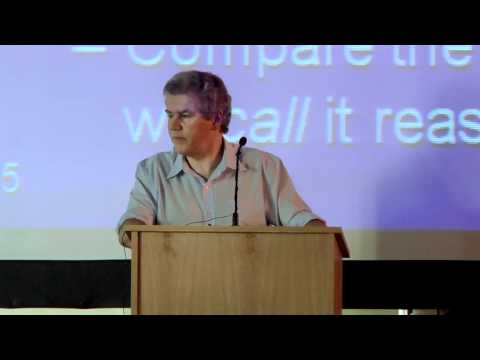
Study guide
What this lecture covers
This lecture opens the course's topic on knowledge, moving on from the earlier discussion of skepticism. Millican explains why defining a more moderate, ordinary threshold for knowledge matters once Cartesian skepticism has shown that near-total certainty is unattainable, then steps back to examine what philosophers are really asking when they pose "what is X?" questions such as "what is knowledge?"
You'll come away able to explain why conceptual questions like "what is knowledge?" go beyond mere questions about word usage, and identify the methods—linguistic intuitions, puzzle cases, argument and systematization—that philosophers use to answer them.
Key ideas
- Moderating the threshold for knowledge: since Cartesian-level certainty rules out almost everything, philosophers look for a more reasonable standard that still distinguishes knowledge from mere belief.
- "What is X?" questions: a recurring philosophical form, associated with Socrates, asking for the nature of concepts like knowledge or freedom, not just how a word is used.
- The geography analogy: whether a discipline "really" includes some subject matter can look like a purely linguistic question, illustrating the puzzle of what "what is X?" questions are asking beyond usage.
- The normative aspect of knowledge: calling a belief "knowledge" isn't just labeling it—it implies the belief is reliable and has genuine authority, so someone can be wrong to claim they "know" something even if they use the word.
- Strawson on induction revisited: Strawson's claim that inductive methods just are what we mean by "reasonable" is challenged by the view that calling an inference reasonable claims real normative force, not just conformity to a label.
- Linguistic intuitions: native speakers' natural judgments about how words apply carry some authority for staying "on the rails" of correct usage, even if they don't settle deeper philosophical truth.
- Puzzle cases (intuition pumps): hypothetical scenarios designed to draw out and test intuitions, often constructed by opposing sides to favor their own view.
- Propositional knowledge vs other kinds: philosophers distinguish knowledge by acquaintance, knowing how, and knowing that (propositional knowledge), with the course focused on the last.
Before you watch
- Recall the earlier lectures on Descartes and scepticism of the external world, since Millican frames this topic as picking up from the failure of Cartesian answers to skepticism.
- Recall Strawson's analytic justification of induction from the induction lectures, which is revisited here as an example of the "what is X?" puzzle.
Check your understanding
- Why does Millican think we need a more moderate threshold for knowledge than the one Descartes was seeking?
- What is the difference between asking "when do we apply the word knowledge?" and asking "what is knowledge?"
- Why does Millican say the concept of knowledge has a normative aspect?
- How are puzzle cases (intuition pumps) used in philosophical argument, according to the lecture?
- What is the difference between propositional knowledge and "knowing how"?
Vocabulary
- threshold (noun)
- A minimum level or standard something must meet.
Philosophers look for a reasonable threshold for knowledge. - attainable (adjective)
- Able to be achieved or reached.
Total certainty seems unattainable after Cartesian skepticism. - conceptual (question) (adjective)
- Relating to the meaning or nature of an idea, not just facts about the world.
'What is knowledge?' is a conceptual question. - usage (of a word) (noun)
- The way a word is actually used by speakers of a language.
The question goes beyond mere word usage. - normative (adjective)
- Relating to standards of correctness, not just description of facts.
Calling something knowledge has a normative aspect. - authority (epistemic) (noun)
- The status of being a trustworthy source of correct belief.
Knowledge implies genuine authority, not just a label. - linguistic intuition (noun)
- A native speaker's natural sense of how a word should be used.
Linguistic intuitions guide philosophical analysis. - on the rails (phrase)
- Staying within the correct or expected pattern of use.
Intuitions keep our usage on the rails of correct meaning. - intuition pump (noun)
- A carefully designed thought experiment meant to trigger a particular judgment.
Puzzle cases act as intuition pumps in philosophical debate. - acquaintance (knowledge by) (noun)
- Direct, firsthand familiarity with something, rather than factual information about it.
Knowledge by acquaintance is knowing a person directly. - propositional knowledge (noun)
- Knowledge that a certain statement is true.
The course focuses on propositional knowledge, or 'knowing that.' - systematization (noun)
- Organizing beliefs or ideas into a consistent, structured whole.
Philosophers use systematization to test a proposed definition. - moderate (standard) (adjective)
- Reasonable and not extreme.
Philosophers look for a moderate standard for knowledge. - geography (analogy) (noun)
- The study of places and their features, used here as a comparison for classifying concepts.
The geography analogy illustrates the puzzle of 'what is X.' - discipline (field) (noun)
- An area of academic study.
Whether geography includes some subject is a question about the discipline. - revisit (verb)
- To return to and reconsider a topic already discussed.
Strawson's claim about induction is revisited here. - force (normative) (noun)
- The persuasive or binding power of a claim or standard.
Calling something reasonable claims real normative force. - step back (phrasal verb)
- To pause and look at a broader picture before continuing.
Millican steps back to examine 'what is X' questions. - opposing sides (phrase)
- Two groups or positions that disagree with each other.
Puzzle cases are often built by opposing sides. - settle (a truth) (verb)
- To determine an answer with finality.
Intuitions don't settle the deeper philosophical truth.
Chapters
- 0:00 <Untitled Chapter 1>
- 0:17 Luminaries
- 0:41 Hilary Putnam
- 0:45 Tim Williamson
- 2:17 What Is Knowledge
- 7:48 Appeal to Linguistic Intuitions
- 8:34 Intuition Pumps
- 9:35 Kinds of Knowledge
- 9:44 Propositional Knowledge
From the YouTube description
A series of lectures delivered by Peter Millican to first-year philosophy students at the University of Oxford. The lectures comprise the 8-week General Philosophy course and were delivered in late 2009.
← 4.4 Modern Responses to Dualism · 5.2 The Traditional Analysis of Knowledge →