Seyed Masoud Hosseini · Overview · Study log · Weekly summaries · Ideas · Search · Transcript · RSS feed
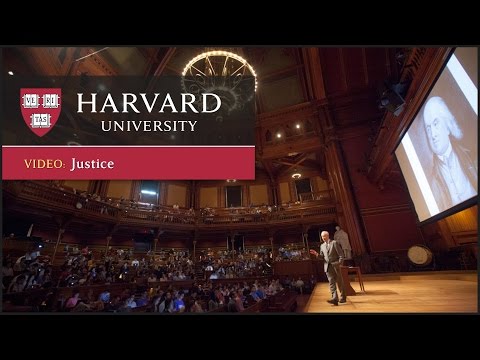
Justice · Lecture 9 of 19 · 55:00
Episode 9: Arguing Affirmative Action
Study guide
What this lecture covers
This lecture turns the previous lecture's distinction between moral desert and entitlement toward a concrete controversy: affirmative action in college admissions. Sandel presents the 1990s case of Cheryl Hopwood, a white applicant rejected by the University of Texas law school under a race-conscious admissions policy, and lets the class argue both sides. Out of the discussion, three arguments for affirmative action emerge, along with the strongest objection to each. In the second half, Sandel pivots to Aristotle, introducing a view of justice based on giving people what they deserve according to the purpose of a social practice.
After watching, you should be able to name and distinguish the corrective, compensatory and diversity arguments for affirmative action, state the main objection each one faces, and explain Aristotle's teleological approach to justice using his flute-player example.
Key ideas
- Corrective argument: race can be considered to correct for the fact that test scores and grades may understate the potential of applicants from disadvantaged schools.
- Compensatory argument: affirmative action is justified as compensation for historic injustices such as slavery and segregation.
- Diversity argument: a racially and ethnically diverse student body serves the educational experience of all students and the wider social mission of the institution.
- Rights objection: if individual rights can't be sacrificed for the common good, does an applicant have a right to be judged only on factors within their control?
- Desert vs. entitlement, applied: Sandel's mock rejection and acceptance letters dramatize the idea that admission may be an entitlement tied to social purpose, not a reward for moral desert.
- Teleological reasoning: Aristotle's method of determining a just distribution by asking what the good in question is for, illustrated by his example of who should get the best flutes.
Walkthrough
The Hopwood case and a class vote (1:36)
Sandel presents Cheryl Hopwood, who worked her way through school, earned strong grades and test scores, and was still rejected by the University of Texas law school under a policy that weighed race and ethnicity to build a diverse class. He asks the class to vote on whether her rights were violated, producing a roughly even split, then opens the floor. Early speakers raise the corrective argument, pointing out that unequal school funding can make test scores an unreliable measure of a minority applicant's true potential.
Objections and legacy admissions (9:34)
The debate widens. Students challenge the compensatory rationale by asking why today's applicants should bear the cost of historic wrongs they didn't commit, while others counter that the effects of slavery and segregation persist in present-day inequality. The discussion also surfaces legacy admissions, the practice of favoring applicants whose parents attended the same school, as a comparable but rarely challenged form of preference based on an arbitrary factor.
Three arguments for affirmative action (16:51)
Sandel steps back and names the three arguments that emerged: the corrective argument, which stays consistent with judging applicants purely on academic promise once test scores are properly interpreted; the compensatory argument, aimed at redressing past injustice; and the diversity argument, which appeals to the educational and social mission of the institution rather than to individual merit or historic wrongs.
Harvard's diversity rationale and the rights objection (26:37)
Sandel reads from Harvard's brief in the 1978 Bakke case, where the university argued that race can count as a "plus" factor alongside geographic origin or musical talent because it contributes to a diverse learning environment. He then presses the hardest objection: if individual rights can't be overridden for the sake of the common good, does an applicant have a right to be judged only on effort and achievement? He revisits how a university's freedom to define its own mission was once used to justify segregation and antisemitic quotas, and the class debates whether today's diversity rationale differs from those cases, with students pointing to the absence of malice and a shift from exclusion to inclusion.
The rejection and acceptance letters (36:35)
Sandel dramatizes the stakes with two mock letters: a rejection letter telling an applicant that society simply didn't need their particular qualities, and an acceptance letter congratulating a successful applicant the way a lottery winner is congratulated, for being useful rather than deserving. This thought experiment presses the question of whether distributive justice, including access to college seats, can or should be separated from moral desert altogether.
Aristotle's alternative: reasoning from purpose (41:46)
Sandel introduces Aristotle, who disagrees with the shared assumption of libertarians and Rawlsian egalitarians that justice has nothing to do with moral desert. For Aristotle, justice means giving people their due according to their virtue and the purpose of what's being distributed. He illustrates this with flutes: the best flutes should go to the best flute players, not to the wealthiest, the best-born, or the winner of a lottery, because that fits the purpose of flute playing. Sandel calls this teleological reasoning, reasoning from the goal or telos of a practice, and closes by connecting it back to the affirmative action debate as, in effect, a disagreement about the purpose of a university education.
Before you watch
- Review the previous lecture's discussion of Rawls's distinction between moral desert and entitlement to legitimate expectations, since this lecture builds directly on it.
- Recall the libertarian and meritocratic positions from earlier lectures, since both are tested against the affirmative action debate here.
Check your understanding
- What are the corrective, compensatory and diversity arguments for affirmative action, and what is the strongest objection to each?
- How did Harvard's brief in the Bakke case frame the diversity rationale?
- What distinction do students draw between historic segregationist policies and present-day affirmative action programs that both appeal to an institution's mission?
- What point is Sandel making with his mock rejection and acceptance letters?
- According to Aristotle's flute example, what determines who deserves the best flute, and why isn't his reasoning utilitarian?
Vocabulary
- affirmative action (noun)
- Policies that give preference to disadvantaged groups, often in admissions or hiring.
The class debates the fairness of affirmative action. - race-conscious (adjective)
- Deliberately taking a person's race into account in a decision.
The admissions policy was race-conscious. - corrective argument (noun)
- The claim that scores should be adjusted to correct for unequal school quality.
The corrective argument says test scores understate some students' potential. - compensatory argument (noun)
- The claim that a policy makes up for past injustice.
The compensatory argument justifies affirmative action as repayment for past wrongs. - diversity argument (noun)
- The claim that a mixed group of people benefits everyone's education or experience.
The diversity argument says a varied student body improves learning. - legacy admissions (noun)
- The practice of favoring applicants whose relatives attended the same school.
Legacy admissions rarely get the same criticism as affirmative action. - redress (verb)
- To make up for a wrong or injustice.
Affirmative action aims to redress past discrimination. - segregation (noun)
- The forced separation of groups of people, especially by race.
Historic segregation is part of the compensatory argument. - quota (noun)
- A fixed number or proportion allowed or required.
Universities once used antisemitic quotas to limit admissions. - malice (noun)
- The intention to harm someone.
Students argue today's diversity policies lack the malice of past exclusion. - brief (legal) (noun)
- A written legal document presenting a party's arguments to a court.
Harvard's brief argued race could count as a plus factor. - plus factor (noun)
- An extra positive consideration in a selection process, not a guarantee.
Race was treated as one plus factor among many. - teleological (adjective)
- Explained by purpose or goal rather than by cause alone.
Aristotle uses teleological reasoning about justice. - telos (noun)
- A Greek word meaning the purpose or ultimate goal of something.
Aristotle asks about the telos of flute playing. - virtue (noun)
- A good moral quality or excellence of character.
The best flutes should go to those with the most virtue in playing. - mission (institutional) (noun)
- The core purpose or goal that an organization is meant to serve.
The diversity rationale appeals to a university's educational mission. - applicant (noun)
- A person who formally applies for something, like a job or admission.
Cheryl Hopwood was an applicant rejected under the policy. - rationale (noun)
- The set of reasons behind a decision or belief.
Harvard's diversity rationale defends its admissions policy. - understate (verb)
- To describe something as less than it really is.
Test scores may understate a disadvantaged student's true potential. - dramatize (verb)
- To present something in a vivid, emotional way to make a point.
Sandel dramatizes the stakes with two mock letters.
Chapters
- 0:00 <Untitled Chapter 1>
- 1:36 Cheryl Hopwood
- 9:34 Critic of Affirmative Action
- 11:51 Legacy Admissions
- 16:51 Corrective Argument
- 18:17 Diversity Argument
- 20:16 The Diversity Argument
- 22:44 The Diversity Argument Is It Persuasive
- 26:37 Arguments for Affirmative Action
- 41:46 Aristotle
From the YouTube description
To register for the 2015 course, visit https://www.edx.org/course/justice-harvardx-er22-1x-0.
PART ONE: ARGUING AFFIRMATIVE ACTION
PART TWO: WHAT'S THE PURPOSE?
Part 1
Sandel describes the 1996 court case of a white woman named Cheryl Hopwood who was denied admission to a Texas law school, even though she had higher grades and test scores than some of the minority applicants who were admitted. Hopwood took her case to court, arguing the schools affirmative action program violated her rights. Students discuss the pros and cons of affirmative action. Should we try to correct for inequality in educational backgrounds by taking race into consideration? Should we compensate for historical injustices such as slavery and segregation? Is the argument in favor of promoting diversity a valid one? How does it size up against the argument that a students efforts and achievements should carry more weight than factors that are out of his or her control and therefore arbitrary? When a universitys stated mission is to increase diversity, is it a violation of rights to deny a white person admission?
PART TWO: WHATS THE PURPOSE?
Sandel introduces Aristotle and his theory of justice. Aristotle disagrees with Rawls and Kant. He believes that justice is about giving people their due, what they deserve. When considering matters of distribution, Aristotle argues one must consider the goal, the end, the purpose of what is being distributed. The best flutes, for example, should go to the best flute players. And the highest political offices should go to those with the best judgment and the greatest civic virtue. For Aristotle, justice is a matter of fitting a persons virtues with an appropriate role.
← Episode 8: What's a Fair Start? · Episode 10: The Good Citizen →