Seyed Masoud Hosseini · Overview · Study log · Weekly summaries · Ideas · Search · Transcript · RSS feed
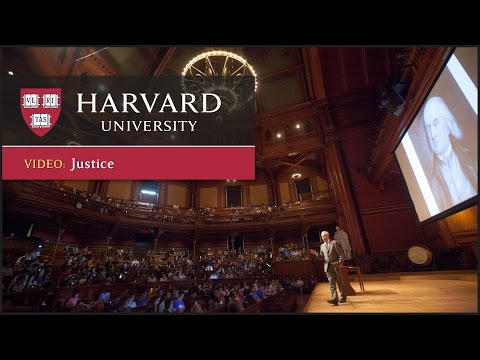
Justice · Lecture 10 of 19 · 55:08
Episode 10: The Good Citizen
Study guide
What this lecture covers
Building on the previous lecture's introduction to Aristotle, Sandel explores how teleological reasoning, reasoning from the purpose of a practice, applies to politics and to a real legal dispute: golfer Casey Martin's request to use a cart on the PGA Tour. The lecture shows that debates about the purpose of a practice are also debates about what qualities deserve honor. In the second half, Sandel tests Aristotle's theory against its most troubling application, his defense of slavery, and against the broader objection that tying justice to fixed roles leaves no room for individual freedom.
After watching, you should be able to explain Aristotle's view that politics exists to cultivate virtue, apply his teleological reasoning to the Casey Martin case, and state the main objections to Aristotle's theory of justice, including the objection from freedom that sets up the following lecture on Kant.
Key ideas
- Teleological reasoning: determining a just distribution requires figuring out the purpose, or telos, of the practice or institution in question.
- Politics as character formation: for Aristotle, the point of political life is to cultivate virtue and the good life, not merely to secure rights or enable exchange, which is why he thinks humans are by nature political.
- Virtue through practice: Aristotle holds that virtues like civic judgment can't be learned from books alone; they're acquired by practicing them, much like flute playing or cooking.
- Honor dimension: debates about a practice's purpose are simultaneously debates about which qualities and people deserve recognition and honor.
- The Casey Martin case: the Supreme Court case over whether a disabled golfer could use a cart on tour, used to test whether walking is essential to golf's purpose.
- The freedom objection: if justice means fitting people to roles that suit their nature, what room is left for a person to choose a different role for themselves?
Walkthrough
Aristotle's teleological justice recapped (0:29)
Sandel reviews Aristotle's disagreement with Kant and Rawls: justice is about giving people what they deserve, which requires reasoning about the purpose of the social practice being judged, as with the earlier flute example. He previews two extended cases for today, politics and golf, both of which show that debates over purpose are tied to debates over honor.
What is politics for? (5:47)
Sandel presents Aristotle's account of distributive justice in the ancient sense, concerned with offices and political authority rather than income. Aristotle argues the purpose of the polis is not mere security or economic exchange but the good life, achieved through cultivating virtue. Because humans can only fully exercise their capacity for reasoned deliberation about right and wrong within political community, Aristotle holds that participating in politics is necessary to realizing human nature, and that civic virtue, not book learning, is acquired only through practice.
The Casey Martin case (18:30)
Sandel introduces Casey Martin, a golfer with a circulatory condition who sued the PGA for the right to use a golf cart in tournaments. The class splits over whether he has that right, and students debate whether walking the course is essential to golf. Sandel notes that the Supreme Court ultimately sided with Martin, while Justice Scalia dissented, arguing games exist purely for amusement and have no essential purpose to debate.
The fairness argument (29:29)
A student proposes a fix: let every golfer use a cart if they want, removing any advantage. Others object that this would undermine golf's status as an athletic competition, comparing it to letting Olympic swimmers use flippers. The exchange sharpens the underlying disagreement about whether golf is fundamentally an athletic contest or a game of skill like billiards.
Honor, essential nature, and Scalia's objection (36:44)
Sandel argues that top golfers resist accommodations partly because allowing carts for everyone would make it harder to defend golf as a true athletic competition, which is where honor and recognition are at stake. He contrasts this with Scalia's view that games are solely for amusement, arguing that real sports involve appreciation of specific excellences, not just entertainment, which is why arguments about a sport's essential features make sense.
Testing Aristotle: slavery and freedom (40:15)
Sandel turns to whether Aristotle's theory is right, starting with its most troubling application: his defense of slavery, which required both that slavery be necessary for society and that certain people be naturally fit for it. Sandel shows Aristotle's own reasoning undercuts this in practice, since many actual slaves in Athens were captured in war rather than "naturally" suited to servitude, which Aristotle himself treats as unjust by his own standard. Students then press the larger objection: if justice means fitting a person to the role suited to their nature, what happens to a person's freedom to choose a different path, such as a "perfect janitor" who wants another life? Sandel closes by framing the deeper disagreement between Aristotle and the Kant/Rawls tradition as a question of whether freedom requires standing independent of any given role, setting up the following lecture on Kant.
Before you watch
- Review the previous lecture's introduction to Aristotle's theory of justice and the flute example, since this lecture assumes that framework.
- Recall the Rawls and Kant material from earlier lectures, since Sandel contrasts their rejection of teleology with Aristotle's approach throughout.
Check your understanding
- Why does Aristotle think that participating in politics is necessary for living a fully virtuous human life?
- What does Sandel mean by saying that debates about the purpose of a practice are also debates about honor?
- What are the two conditions Aristotle says must be met for slavery to be just, and why does his own account undercut its application in Athens?
- Why does Justice Scalia's dissent in the Casey Martin case count, in Sandel's telling, as an anti-Aristotelian position?
- What is the main objection to Aristotle's theory of justice as "fit," and how does it connect to the upcoming discussion of Kant?
Vocabulary
- teleological reasoning (noun)
- Reasoning that determines what is right based on the purpose of a practice.
Teleological reasoning asks what golf is really for. - polis (noun)
- The ancient Greek city-state, a political community.
Aristotle believed the polis exists to cultivate virtue. - cultivate (virtue) (verb)
- To develop or improve a quality over time through practice.
Politics exists partly to cultivate virtue in citizens. - deliberation (noun)
- Careful thought and discussion before making a decision.
Political community allows reasoned deliberation about right and wrong. - civic virtue (noun)
- The qualities of a good and responsible citizen.
Civic virtue is acquired through practice, not books. - circulatory condition (noun)
- A medical problem affecting blood flow in the body.
Casey Martin's circulatory condition made walking painful. - dissent (verb)
- To formally disagree with a majority decision, especially in a court ruling.
Justice Scalia dissented from the Casey Martin ruling. - amusement (noun)
- Enjoyment or entertainment.
Scalia argued games exist purely for amusement. - accommodation (noun)
- A special arrangement made to help someone, especially with a disability.
Golfers debated whether a cart was a fair accommodation. - excellence (noun)
- The quality of being outstanding or very skilled at something.
Sports involve appreciation of specific excellences. - servitude (noun)
- The state of being a slave or forced to serve someone else.
Aristotle claimed some people were naturally fit for servitude. - undercut (verb)
- To weaken or damage an argument or position.
Aristotle's own reasoning undercuts his defense of slavery. - essential nature (noun)
- The core, defining quality of something.
The debate asks whether walking is part of golf's essential nature. - fit (moral) (noun)
- The idea of matching a person to a role suited to their qualities.
Aristotle's theory of justice as fit raises the freedom objection. - recap (verb)
- To briefly review what was already discussed.
Sandel recaps Aristotle's disagreement with Kant and Rawls. - extended case (noun)
- A detailed example used to explore an idea over a longer discussion.
Politics and golf serve as two extended cases in this lecture. - sue (verb)
- To take legal action against someone or something in court.
Casey Martin sued the PGA for the right to use a cart. - advantage (unfair) (noun)
- A benefit that gives one person an edge over others.
A cart might give a golfer an unfair advantage. - undermine (verb)
- To weaken or damage something gradually.
Allowing carts might undermine golf's status as athletic competition. - condition (medical) (noun)
- A state of health, often referring to an illness or disorder.
His medical condition made walking long distances painful.
Chapters
- 0:00 <Untitled Chapter 1>
- 0:29 Aristotle
- 5:47 What Is Politics
- 5:57 Politics Is about Forming Character
- 6:50 The Point of Politics Is Not To Shape the Moral Character of Citizens
- 12:50 Why Is It Necessary To Live in a Good City in Order To Live a Virtuous Life
- 18:30 Who Was Casey Martin
- 29:29 Fairness Argument
- 36:44 What Is the Essential Nature of Golf
- 40:15 Aristotle's Theory of Justice Is Right or Wrong
- 42:10 Aristotle's Defense of Slavery
From the YouTube description
To register for the 2015 course, visit https://www.edx.org/course/justice-harvardx-er22-1x-0.
PART ONE: THE GOOD CITIZEN
Aristotle believes the purpose of politics is to promote and cultivate the virtue of its citizens. The telos or goal of the state and political community is the good life. And those citizens who contribute most to the purpose of the community are the ones who should be most rewarded. But how do we know the purpose of a community or a practice? Aristotles theory of justice leads to a contemporary debate about golf. Sandel describes the case of Casey Martin, a disabled golfer, who sued the PGA after it declined his request to use a golf cart on the PGA Tour. The case leads to a debate about the purpose of golf and whether a players ability to walk the course is essential to the game.
PART TWO: FREEDOM VS. FIT
How does Aristotle address the issue of individual rights and the freedom to choose? If our place in society is determined by where we best fit, doesnt that eliminate personal choice? What if I am best suited to do one kind of work, but I want to do another? In this lecture, Sandel addresses one of the most glaring objections to Aristotles views on freedom—his defense of slavery as a fitting social role for certain human beings. Students discuss other objections to Aristotles theories and debate whether his philosophy overly restricts the freedom of individuals.
← Episode 9: Arguing Affirmative Action · Episode 11: The Claims of Community →