Seyed Masoud Hosseini · Overview · Study log · Weekly summaries · Ideas · Search · Transcript · RSS feed
Death · Lecture 26 of 26 · 47:46
Lecture 26: Suicide, part III: Morality of suicide and course conclusion
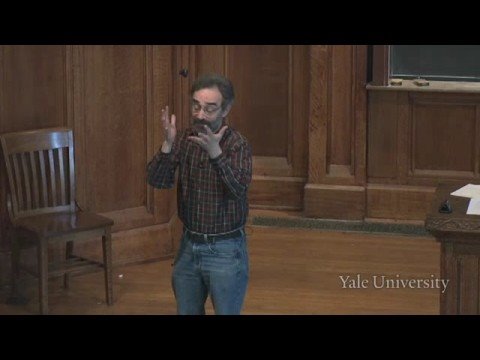
Study guide
What this lecture covers
In the final lecture of the course, Kagan turns from the rationality of suicide to its morality, applying two major moral frameworks: consequentialism (utilitarianism) and deontology, with its emphasis on rights and harm rather than results alone. He works through the famous organ-transplant thought experiment to motivate the deontological view that harming an innocent person can be wrong even when it produces better results, then asks whether that prohibition applies to harming yourself, and whether consent can override it. The lecture closes with Kagan's summary of the course's arguments about the soul, immortality, and the appropriate emotional stance toward death.
After watching, you should be able to explain how utilitarianism and deontology differ in their approach to the morality of suicide, describe the organ-transplant thought experiment and what it's meant to show, explain the role consent plays in justifying self-harm within a deontological framework, and summarize Kagan's overall conclusions about the soul, immortality, fear, and gratitude that closed the course.
Key ideas
- Consequences and suicide: at first glance death looks like a bad consequence, but in cases where a person is genuinely better off dead, their death is a good, not bad, consequence, complicating a purely consequence-based verdict.
- Effects on others: loved ones may suffer distress from a suicide, but they may also, on balance, feel relief that the person's suffering has ended, so consequences for others don't settle the question either.
- Utilitarianism's verdict: since utilitarianism judges actions solely by outcomes for everyone affected, it yields a moderate conclusion: suicide is sometimes justified and sometimes not, depending on the facts, including obligations like caring for dependents.
- Deontology's added factor: deontologists hold that consequences aren't the only thing that matters; how a result is produced, especially whether an innocent person is harmed, matters too, illustrated by the "chop up John" organ-transplant thought experiment where good results don't justify killing an innocent bystander.
- Applying rights to yourself: if there's a right against harming innocent people, and you are an innocent person, this seems to make suicide wrong, unless morality is held to apply only to how you treat others.
- Harm "overall": one possible deontological escape is that the prohibition targets leaving someone worse off overall, and suicide, in cases where you're truly better off dead, doesn't do that.
- Consent as a moral factor: another possible escape is that consent can make otherwise-forbidden harm permissible, as with boxing or a soldier's self-sacrifice by throwing himself on a grenade.
- Limits on consent: unrestricted consent leads to implausible conclusions (killing someone insane or a small child who asks to die), so a workable consent principle requires the choice to be free, informed, competent, and backed by good reasons.
- Course conclusion: Kagan restates his central claims — there is no soul, death is not mysterious, immortality would be undesirable, fear of death is largely inappropriate, and gratitude for having lived is the fitting response, alongside acceptance that suicide can, in limited circumstances, be the reasonable choice.
Walkthrough
Introduction: the consequences of suicide (0:00)
Kagan picks up from the prior lecture's rejection of two "quick and dirty" theological arguments against suicide and begins a more systematic look at morality, starting with consequences. He argues that although death is usually bad, in cases where someone is genuinely better off dead, their death is a good rather than bad consequence, which complicates any simple claim that suicide's consequences must be negative. He extends this to effects on family and loved ones, noting that while suicide often causes them distress, they may also feel relief at the end of a loved one's suffering, so this too doesn't settle the matter cleanly.
Utilitarianism on the morality of suicide (8:25)
Kagan applies utilitarianism, the view that morality is entirely about producing the best balance of happiness over suffering for everyone, to suicide. He concludes utilitarianism yields a moderate position: suicide is neither always wrong (since that would require it to always have bad consequences, which is implausible) nor always acceptable (since a healthy young person killing themself clearly has worse consequences than not doing so). The judgment depends on the specific facts, including whether medical alternatives exist and whether others, such as dependent children, would be harmed more by the person's death than by their continued suffering.
Deontology and prohibition against harming the innocent (13:21)
Kagan introduces deontology, which holds that factors besides consequences matter morally, particularly whether an action harms an innocent person. He presents the organ-transplant thought experiment: killing one healthy patient to harvest organs and save five dying patients would produce better results by the numbers, yet most people judge it clearly wrong, showing that a right against being harmed can outweigh better consequences. Applying this to suicide, he notes the apparent implication that killing yourself, as an innocent person, would also be wrong regardless of the good results, unless morality is held to govern only how we treat others rather than ourselves, a distinction Kagan finds hard to defend since he himself is a person too.
Factoring consent into committing suicide (28:33)
Kagan explores two ways a deontologist might still permit suicide. First, the prohibition on harm might really target leaving someone worse off overall, which doesn't describe genuine cases of suicide where the person benefits on balance, illustrated by the analogy of an amputation that harms locally but benefits overall. Second, and more centrally, consent might override the prohibition, since suicide is something done to oneself with one's own agreement, similar to how boxers consent to blows or a soldier consents to sacrificing himself on a grenade to save others. But Kagan cautions that an unrestricted consent principle leads to implausible results, such as it being acceptable to kill someone who is insane or a small child who casually says "kill me," so any workable consent principle must require the choice to be free, informed, competent, and supported by good reasons. Under such a modified principle, suicide can be morally legitimate in some cases but not all, paralleling the moderate conclusion reached from utilitarianism.
Summary and conclusion (41:17)
Kagan closes the entire course by reviewing its arc: there is no soul, we are physical machines (albeit remarkable ones capable of love, creativity, and planning), and death is the end, no more mysterious than any machine eventually failing. He reaffirms that immortality would be undesirable, that fear is largely an inappropriate response to death given the arguments developed across the semester, and that gratitude for having lived at all is a more fitting attitude, while acknowledging that for some people, in some circumstances, life can rightly become something to let go of rather than hold onto at any cost. He invites students to have examined their own beliefs carefully, whether or not they ended up agreeing with him, and to face death "without fear and without illusion."
Before you watch
- This lecture is the direct continuation of the previous one on the morality of suicide, and depends on the earlier lecture's discussion of the rationality of suicide.
- Familiarity with the deprivation account of death's badness and the course's earlier arguments against the existence of a soul and against the desirability of immortality is assumed for the concluding summary.
- No new outside reading is introduced in this lecture.
Check your understanding
- Why does Kagan think that, in cases where a person is genuinely better off dead, the consequentialist case against suicide becomes much weaker?
- What is the organ-transplant ("chop up John") thought experiment meant to show, and how does it motivate the deontological objection to a purely consequence-based morality?
- Explain the two deontological strategies Kagan considers for permitting suicide: the "harm overall" move and the consent principle.
- Why can't an unrestricted consent principle be accepted, and what conditions does Kagan suggest a workable version would need?
- Summarize the main claims Kagan restates in his conclusion about the soul, immortality, fear, and gratitude. Do you find his overall position convincing, and why or why not?
Vocabulary
- consequentialism (noun)
- The view that an action's morality depends only on its results.
Consequentialism judges suicide by its overall effects on everyone. - utilitarianism (noun)
- The view that the right action produces the most happiness for the most people.
Utilitarianism gives a moderate verdict on the morality of suicide. - deontology (noun)
- The view that some actions are right or wrong based on rules, not just results.
Deontology says harming an innocent person can be wrong even with good results. - innocent (adjective)
- Not guilty of any wrongdoing.
The organ-transplant case involves killing an innocent healthy person. - organ transplant (noun)
- A medical procedure that moves an organ from one body to another.
The organ transplant thought experiment questions whether good results justify harm. - bystander (noun)
- A person who is present at an event but not directly involved.
Killing an innocent bystander for organs seems clearly wrong to most people. - consent (noun)
- Agreement or permission for something to happen.
Consent might make otherwise-forbidden harm morally acceptable. - unrestricted (adjective)
- Having no limits or conditions.
An unrestricted consent principle would allow implausible outcomes. - competent (adjective)
- Having the mental ability to make a sound decision.
A workable consent principle requires the person to be free, informed, and competent. - amputation (noun)
- The surgical removal of a body part.
Amputation harms locally but can benefit the person overall. - grenade (noun)
- A small explosive weapon thrown by hand.
A soldier may consent to sacrifice by throwing himself on a grenade. - illusion (noun)
- A false belief or a mistaken impression of reality.
Kagan closes by urging us to face death without fear and without illusion. - dependent (person) (noun)
- Someone who relies on another person for support or care.
Utilitarianism weighs harm to dependents, like children, in the suicide decision. - relief (noun)
- A feeling of comfort after the ending of pain or distress.
Loved ones may feel relief once someone's suffering ends. - affirm (verb)
- To state firmly that something is true.
Kagan affirms his central claims one last time in his conclusion. - systematic (adjective)
- Done carefully and thoroughly, following clear steps.
The lecture takes a more systematic look at the morality of suicide. - prohibition (noun)
- A rule that forbids a certain action.
Deontology includes a prohibition against harming innocent people. - informed (consent) (adjective)
- Made with full knowledge and understanding of the relevant facts.
A workable consent principle requires the choice to be informed. - sacrifice (noun)
- Giving up something valuable, sometimes even your life, for another's benefit.
A soldier's sacrifice on a grenade saves his comrades. - obligation (noun)
- A duty that a person is required to fulfill.
The gratitude argument claims we have an obligation to keep living.
Chapters
- 0:00 Chapter 1. Introduction: The Consequences of Suicide
- 8:25 Chapter 2. Utilitarianism on the Morality of Suicide
- 13:21 Chapter 3. Deontology and Prohibition against Harming the Innocent
- 28:33 Chapter 4. Factoring Consent into Committing Suicide
- 41:17 Chapter 5. Summary and Conclusion
From the YouTube description
Death (PHIL 176)
The lecture begins by examining the consequences a suicide has on both the person committing it and those around this person. The question is raised, however, whether this factor is the only that counts morally, as utilitarians claim, or whether other factors matter morally as well, as deontologists claim. The moral relevance of a deontological prohibition against harming the innocent is considered. A concluding summary of the course is offered.
00:00 - Chapter 1. Introduction: The Consequences of Suicide
08:25 - Chapter 2. Utilitarianism on the Morality of Suicide
13:21 - Chapter 3. Deontology and Prohibition against Harming the Innocent
28:33 - Chapter 4. Factoring Consent into Committing Suicide
41:17 - Chapter 5. Summary and Conclusion
This course was recorded in Spring 2007.