Seyed Masoud Hosseini · Overview · Study log · Weekly summaries · Ideas · Search · Transcript · RSS feed
Death · Lecture 22 of 26 · 47:49
Lecture 22: Fear of death
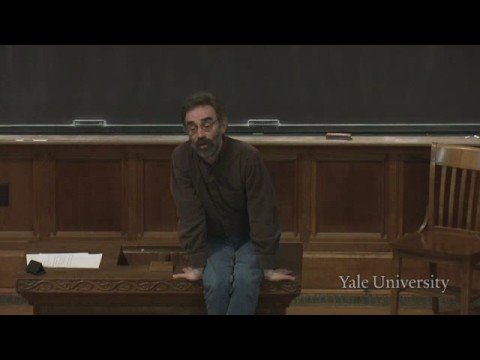
Study guide
What this lecture covers
Having argued that death is not always something to disregard, Kagan asks how we should feel about it. He develops general conditions under which an emotion is an appropriate, rational response to a situation, using pride and fear as test cases, and then applies those conditions to fear of death. He extends the analysis to anger, asking whether it makes sense to be angry at God or at an indifferent universe for our mortality.
After watching, you should be able to state the three conditions Kagan proposes for fear to be appropriate, explain why he thinks fear of being dead itself does not satisfy them, distinguish that from a more limited fear of dying too soon, and describe why he ultimately favors gratitude over fear or anger as the fitting response to mortality.
Key ideas
- Appropriateness conditions for emotions: emotions like pride can be assessed as rational or irrational given the facts, not just described as present or absent; pride requires an accomplishment that reflects on you.
- Three conditions for fear: the object must be bad, there must be a nonnegligible chance of it happening, and there must be uncertainty about whether or how badly it will occur.
- Certainty rules out fear: if a bad outcome is guaranteed and its exact nature is known, fear doesn't make sense, though anger, resentment, or sadness might.
- Fear of being dead vs. fear of dying soon: being dead itself, as a mere deprivation, is certain and arguably not "bad" in the relevant sense, so fear of it doesn't fit; what can make sense is fear tied to the unpredictability of dying earlier than expected.
- Proportionality: even when fear is appropriate, its intensity should match the size and likelihood of the harm, so for most young, healthy people only mild fear (if any) is warranted.
- Conditions for anger: anger requires an agent capable of choice, and that agent must have wronged you; an impersonal universe cannot be wronged by or wrong anyone.
- Anger at God or the universe: even under a theistic picture, Kagan argues God does not owe us more life, so anger doesn't fit; under an atheistic picture, the universe isn't an agent at all, so anger is a kind of personification error.
- Gratitude as the fitting response: Kagan closes by suggesting sorrow at not getting more life is reasonable, but the deeper, more appropriate response is gratitude for having gotten to live at all.
Walkthrough
How should thinking about death influence behavior? (0:00)
Kagan recaps the distinction from the previous lecture between facts that merely cause a behavior and facts that give a reason for it, and announces that the rest of the course will ask what reasons the facts about death actually give us. He notes Kafka's remark that "the meaning of life is the fact that it ends" as an example of the intuition that mortality should shape how we live, and reframes the question around emotional response rather than action first.
Is fear of death a rational, appropriate response? (2:14)
Kagan introduces the idea that emotions, not just actions, can be assessed for appropriateness. Using pride as an example, he argues that being proud of something requires it to be an accomplishment that in some way reflects on you, whether directly (your own accomplishment) or indirectly (a child's, or a national team's). This sets up the general method: identify the conditions under which an emotion makes sense, then check whether death satisfies them for fear.
Required conditions for feeling fear of death (8:40)
Kagan lays out three conditions for fear to be rational: the feared object must be bad, there must be a nonnegligible chance of it occurring, and there must be genuine uncertainty about whether or how badly it will happen. He illustrates each with examples — being afraid of an ice cream cone doesn't make sense because it isn't bad; fearing death by tiger mauling doesn't make sense because the chance is negligible; and, most importantly, a guaranteed and precisely known bad outcome (a cookie stolen from the fridge every single day, or a fixed, repeated electric shock) does not support fear even though it is both bad and certain, because certainty removes the third condition. In such cases anger, resentment, or sadness might still make sense.
What is meant by fear? How much of it is appropriate? (22:06)
Applying the three conditions to death, Kagan first considers fear of the process of dying, noting that a painful death is possible and that inadequate pain medication at the end of life is a real, though not universal, risk, so some proportionate fear of a painful dying process can make sense. He then turns to fear of being dead itself and argues it fails the conditions: there is no uncertainty that death will come, and, on the deprivation account of death's badness he defended earlier in the course, being dead is a mere absence of good rather than an intrinsically bad state, so it isn't the right kind of object for fear. What can make sense, he argues, is fear tied to the unpredictability of when you'll die, using the analogy of a mother's curfew call that could come at an unknown time within a range. Since most listeners face only a small chance of dying soon, he concludes that only mild fear, if any, is proportionate for a healthy young person.
Anger as another emotional reaction to death (34:29)
Having argued that fear of death is mostly inappropriate, Kagan asks whether anger fits instead. He sets out two conditions for anger: it must be directed at an agent capable of choice, and that agent must have wronged you. Considering a theistic view where God is responsible for human mortality, he argues that even if God is an agent, giving us a finite (though generous) life doesn't clearly count as wronging us, using an analogy of a roommate who shares some candy but not an endless supply. Considering an atheistic view of an impersonal universe, he argues anger fails the first condition entirely, since the universe has no choice or agency, and treating it as though it does is a form of personification.
Sorrow, preciousness, and conclusion (44:49)
Kagan allows that sorrow or regret at not getting more life makes sense, given how much the world has to offer. But he closes by suggesting a further, more fitting response: gratitude for having been alive at all, since most matter in the universe never becomes a living, experiencing person. He reads a passage from Kurt Vonnegut's Cat's Cradle about "lucky mud" to illustrate this attitude of gratitude as the emotionally appropriate response to mortality.
Before you watch
- This lecture builds directly on the previous one's distinction between facts that cause behavior and facts that give reasons for it.
- The deprivation account of death's badness, developed earlier in the course, is used as a premise here, so reviewing it helps make sense of why "being dead" is treated as not straightforwardly bad.
- The earlier argument that immortality would be undesirable is referenced briefly and is worth recalling.
Check your understanding
- What three conditions does Kagan propose for fear to be a rational response, and which one rules out fear of being dead itself?
- Why does the cookie-theft example show that a guaranteed bad outcome can fail to justify fear even though it satisfies two of the three conditions?
- Explain the difference between fearing the process of dying and fearing being dead, according to Kagan.
- What two conditions does Kagan set out for anger to be appropriate, and how does each apply differently to a theistic versus an atheistic picture of the universe?
- Why does Kagan ultimately favor gratitude over fear or anger as a response to mortality?
Vocabulary
- appropriate (adjective)
- Suitable or fitting for a particular situation.
Is fear an appropriate response to death? - pride (noun)
- A feeling of satisfaction about an achievement.
Pride requires an accomplishment that reflects on you in some way. - nonnegligible (adjective)
- Large enough to matter, not able to be ignored.
Fear requires a nonnegligible chance that the bad thing will happen. - certainty (noun)
- The state of being completely sure something will happen.
Certainty about a bad outcome can actually rule out fear as a response. - proportionate (adjective)
- Matching in size or degree to what is appropriate.
Only a proportionate amount of fear makes sense for a small risk. - resentment (noun)
- A bitter feeling caused by being treated unfairly.
Resentment, not fear, might make sense about a guaranteed bad outcome. - curfew (noun)
- A set time by which someone must return home.
Not knowing your curfew time is like not knowing when death will come. - wrong (someone) (verb)
- To treat someone unfairly or unjustly.
Anger requires believing that someone has wronged you. - impersonal (adjective)
- Not connected to any particular person; without personal feeling or agency.
An impersonal universe cannot choose to wrong anyone. - personification (noun)
- Treating something non-human as if it were a person with feelings or choices.
Getting angry at the universe is a form of personification. - theistic (adjective)
- Relating to belief in a god or gods.
Under a theistic view, God is responsible for human mortality. - sorrow (noun)
- A feeling of deep sadness.
Sorrow at not getting more life can make sense. - gratitude (noun)
- A feeling of thankfulness.
Kagan says gratitude for having lived is the most fitting response. - fitting (adjective)
- Suitable or well-matched to a situation.
Gratitude seems more fitting than fear, in Kagan's view. - reflect on (phrasal verb)
- To be connected to or say something about a person's worth.
A child's achievement can reflect on the proud parent too. - distinguish (verb)
- To recognize a difference between two things.
Kagan distinguishes fearing the process of dying from fearing being dead. - generous (adjective)
- Giving more than is required or expected.
Even a generous but finite life might not be a wrong done to us. - mauling (noun)
- A violent attack that causes serious injury, often by an animal.
Fear of death by tiger mauling doesn't make sense given the tiny chance. - matter (in the universe) (noun)
- Physical substance that makes up all objects.
Most matter in the universe never becomes a living, thinking person. - guaranteed (adjective)
- Certain to happen, with no possibility of it not occurring.
A guaranteed bad outcome doesn't automatically justify fear. - reasonable (adjective)
- Fair and sensible, based on good reasons.
Kagan asks what amount of fear is reasonable for a healthy young person.
Chapters
- 0:00 Chapter 1. How Should Thinking about Death Influence Behavior?
- 2:14 Chapter 2. Is Fear of Death a Rational Appropriate Response?
- 8:40 Chapter 3. Required Conditions for Feeling Fear of Death
- 22:06 Chapter 4. What Is Meant by Fear? How Much of This Fear Is Appropriate?
- 34:29 Chapter 5. Anger as Another Emotional Reaction to Death
- 44:49 Chapter 6. Sorrow and Preciousness: Other Emotions on Death and Conclusion
From the YouTube description
Death (PHIL 176)
Professor Kagan explores the issue of how thinking about death may influence the way we live. Fear as an emotional response to death is discussed as well as whether it is appropriate and under what conditions. A distinction is made between fear of the process of dying, and fear of death itself and what may come when one is dead. Finally, a number of other negative emotions are considered as possible appropriate responses to death and dying, such as anger, sadness, and sorrow.
00:00 - Chapter 1. How Should Thinking about Death Influence Behavior?
02:14 - Chapter 2. Is Fear of Death a Rational Appropriate Response?
08:40 - Chapter 3. Required Conditions for Feeling Fear of Death
22:06 - Chapter 4. What Is Meant by Fear? How Much of This Fear Is Appropriate?
34:29 - Chapter 5. Anger as Another Emotional Reaction to Death
44:49 - Chapter 6. Sorrow and Preciousness: Other Emotions on Death and Conclusion
This course was recorded in Spring 2007.
← Lecture 21: Other bad aspects of death, part II · Lecture 23: How to live given the certainty of death →