Seyed Masoud Hosseini · Overview · Study log · Weekly summaries · Ideas · Search · Transcript · RSS feed
Human Behavioral Biology · Lecture 25 of 25 · 53:53
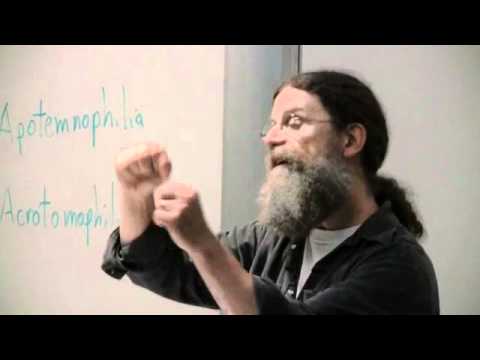
Lecture 25: Individual Differences
Study guide
What this lecture covers
This is the last lecture of Robert Sapolsky's Human Behavioral Biology course, and it works as a synthesis rather than a new topic. Instead of introducing fresh material, it revisits the recurring question of the course, why did a behavior happen, and pushes it toward a single theme: as science explains more about the biology behind behavior, the line between a disorder that belongs to 'them' and ordinary variation that belongs to 'us' keeps moving.
The lecture moves through a series of neuropsychiatric conditions, from epilepsy and schizophrenia to Huntington's disease, Tourette's syndrome, and several rare disorders, showing how each one has shifted, or is shifting, from being seen as a moral failing to being seen as a biological continuum that includes everyone. It closes with what this means for free will, compassion, and the choices the students in the audience will face once they hold positions of power.
Key ideas
- The 'it's not him, it's his disease' shift: society learned to separate a person's identity from their epilepsy around 1900; the lecture argues we are still learning to do this for other conditions.
- Them versus us: many disorders, examined closely, turn out to be extreme points on a continuum that also includes ordinary personality traits, not a separate category.
- Huntington's disease and disinhibition: years before the movement disorder appears, Huntington's causes frontal cortex changes that produce disinhibited, impulsive behavior, which the lecture reframes as an evolutionary trade-off tied to increased reproduction before symptom onset.
- Tourette's syndrome: described as a case where inappropriate impulses that everyone has become uncontrollably expressed, illustrating a clear line between a person's identity and their disorder.
- PANDAS: a proposed autoimmune mechanism in which childhood strep infections trigger antibodies that attack the nervous system, producing tic and obsessive symptoms.
- Modulation, not causation: consistent with the course's running theme, no single factor causes a behavior; biological factors amplify or dampen pre-existing tendencies.
- The fear of being explained: growing biological knowledge about traits like risk-taking or faithfulness can feel threatening to a sense of unique individuality; the lecture argues this fear is misplaced.
Walkthrough
Whose fault is it? (1:45)
Sapolsky reframes the course's central question, why did a behavior occur, as often really asking whose fault it is. This connects back to earlier lectures on the frontal cortex, volition, and culpability. He notes that this question complicates simple notions of free will and culpability, and introduces the lecture's throughline: how far society has come, and how far it still needs to go, in drawing a line between a person and their biology.
Epilepsy and the line between disease and self (4:07)
Using epilepsy as the clearest success story, the lecture contrasts historical treatment of seizures as demonic possession, including legal punishment for injuries caused during a seizure, with the modern understanding that a person is not responsible for actions during a seizure. This "it's not him, it's his disease" shift is presented as a landmark transition, one that took centuries and that society has not yet achieved for many other conditions, such as schizophrenia, learning disabilities, and dyslexia.
Schizophrenia, Huntington's, and Tourette's: disorders of disinhibition (6:10)
The lecture works through several disorders that involve disinhibited behavior. Schizophrenia is discussed through the John Hinckley case and the public backlash against the insanity verdict, showing society's continued discomfort with separating illness from blame. Huntington's disease is presented in detail: years before its characteristic movement disorder appears, patients show frontal cortex degradation and increasingly disinhibited, impulsive behavior, including higher reproductive rates during that window, which the lecture frames as a possible evolutionary trade-off. Tourette's syndrome is then discussed as a particularly clear illustration that ordinary people have inappropriate impulses they suppress, while Tourette's removes that inhibition. The proposed PANDAS mechanism, where childhood strep infections may trigger an autoimmune attack on the nervous system, is offered as one possible biological pathway into tic disorders and obsessive-compulsive disorder.
Rare and unusual syndromes (27:33)
To push the them-versus-us theme further, the lecture surveys a set of unusual conditions: Jerusalem syndrome, in which travelers become psychotic after their expectations of the Holy Land are shattered; Stendhal syndrome, a similar breakdown triggered by overwhelming art in Florence; trichotillomania and its extreme form, Rapunzel syndrome, involving compulsive hair-eating; body integrity identity disorder, in which people feel they are meant to have a limb missing; and a case report linking a stroke to an obsession with polka music. Sapolsky uses these to argue that most such conditions did not even have names a few decades ago, and that science will keep discovering more, not fewer, of these continua.
What growing knowledge means for individuality (35:41)
Sapolsky addresses the anxiety that comes with this expanding knowledge: if science can explain personality traits, religious belief, or risk tolerance biologically, does that threaten the sense of being a unique individual? He argues it does not, using the analogy of Arthur C. Clarke's story "The Nine Billion Names of God," where the stars go dark as computers complete a list of God's names. He counters that explaining a phenomenon does not remove its wonder, and that science generates more questions than it answers, so it will never fully "explain everything."
Applying this: compassion and action (45:43)
The lecture turns to the practical stakes for the audience, many of whom will become doctors, judges, and legislators making real decisions shaped by this material. Sapolsky warns that expanded diagnostic labels can be misused to deny people jobs, healthcare, or housing, but argues the more hopeful outcome is an expanded circle of empathy, similar to how epilepsy came to be understood as a disease deserving care rather than punishment. He closes with a personal story about his father, an architect who taught night-school students to see their work as carrying moral weight, and argues that the complexity of behavioral biology is not an excuse for inaction, urging students not to treat compassion and scientific understanding as opposing choices.
Before you watch
- This lecture assumes familiarity with earlier discussions of the frontal cortex, free will, and culpability from earlier in the course.
- Prior lectures on schizophrenia and obsessive-compulsive disorder are referenced directly and provide useful background.
- No new biological mechanisms are introduced in depth here; the lecture works best as a review of themes from across the course.
Check your understanding
- What historical shift in how epilepsy was understood does Sapolsky use as a model for how other disorders might eventually be understood?
- Why does Huntington's disease produce disinhibited behavior years before its motor symptoms appear, and how does the lecture connect this to reproduction?
- In what way does Tourette's syndrome illustrate the difference between having an impulse and acting on it?
- According to the lecture, why won't scientific explanation eliminate the sense of wonder or uniqueness people feel about themselves?
- What risk does Sapolsky identify in giving more behaviors formal diagnostic labels, and what outcome does he hope for instead?
Vocabulary
- culpability (noun)
- The degree to which someone is responsible or blameworthy for an action.
Brain disorders raise hard questions about culpability. - disinhibition (noun)
- A loss of normal self-control over impulses or behavior.
Huntington's disease produces disinhibition before movement symptoms appear. - continuum (noun)
- A continuous range where extremes gradually connect through smaller steps.
Many disorders sit on a continuum with ordinary traits. - moral failing (noun)
- A perceived personal or ethical fault, as opposed to a medical condition.
Epilepsy was once seen as a moral failing rather than a disease. - autoimmune (adjective)
- Relating to the immune system mistakenly attacking the body's own tissue.
PANDAS proposes an autoimmune cause for some tic disorders. - compulsive (adjective)
- Done repeatedly and uncontrollably.
Trichotillomania involves compulsive hair-pulling. - obsessive-compulsive disorder (noun)
- A condition involving repeated unwanted thoughts and compulsive behaviors.
Some tic disorders overlap with obsessive-compulsive disorder. - insanity verdict (noun)
- A legal ruling that a defendant is not responsible due to mental illness.
The insanity verdict in the Hinckley case sparked public backlash. - trade-off (evolutionary) (noun)
- A balance where a benefit in one area comes with a cost in another.
Huntington's may reflect an evolutionary trade-off with reproduction. - empathy (noun)
- The ability to understand and share another person's feelings.
Expanding empathy is Sapolsky's hoped-for outcome of more biological knowledge. - diagnostic label (noun)
- A formal medical name given to a condition or set of symptoms.
Diagnostic labels can be misused to deny people opportunities. - volition (noun)
- The power of using one's own will to make decisions.
Brain disorders complicate simple ideas of volition. - neuropsychiatric (adjective)
- Relating to conditions affecting both the nervous system and mental health.
The lecture surveys several neuropsychiatric conditions. - impulsive (adjective)
- Acting suddenly without thinking about consequences.
Frontal cortex damage can produce impulsive behavior. - synthesis (noun)
- A combination of ideas into a unified whole.
The final lecture works as a synthesis of earlier themes. - tic (disorder) (noun)
- A sudden, repeated, involuntary movement or sound.
Tourette's syndrome involves uncontrollable tics. - expanded circle (of empathy) (noun)
- A widening range of people or conditions treated with compassion and understanding.
Sapolsky hopes for an expanded circle of empathy toward the mentally ill. - backlash (noun)
- A strong negative public reaction to an event or decision.
The insanity verdict caused public backlash. - misused (adjective)
- Used incorrectly or unfairly.
Diagnostic labels can be misused to deny people opportunities. - moral weight (noun)
- The seriousness or ethical importance of an action or decision.
Sapolsky's father taught students their work carried moral weight.
Chapters
- 0:00 Introduction
- 1:45 Why did it happen
- 4:00 Epilepsy
- 6:00 Schizophrenia
- 11:28 Individual Differences
From the YouTube description
(June 2, 2010) Professor Robert Sapolsky gives the final lecture in the Human Biology 160 class. He uses the lecture to wrap up any loose ends and show how the themes of the class connects without the more complex concepts that were brought up throughout the course.
Stanford University:
http://www.stanford.edu/
Stanford Department of Biology:
http://biology.stanford.edu/
Stanford University Channel on YouTube:
http://www.youtube.com/stanford