Seyed Masoud Hosseini · Overview · Study log · Weekly summaries · Ideas · Search · Transcript · RSS feed
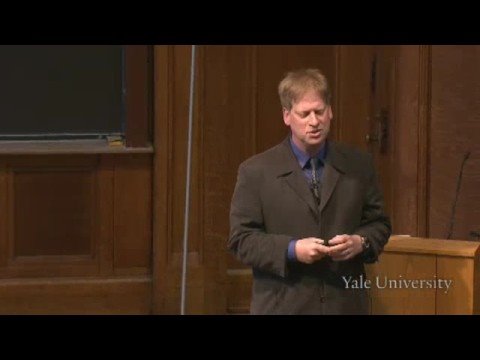
Introduction to Psychology · Lecture 3 of 20 · 56:30
3. Foundations: Freud
Study guide
What this lecture covers
This lecture examines Sigmund Freud as one of two "grand theorists" the course covers (the other being B. F. Skinner, in the next lecture). Bloom presents Freud's core claims — the unconscious mind, the id/ego/superego model, psychosexual development, defense mechanisms, and dream interpretation — before turning to a critical scientific assessment of the theory.
After watching, you should be able to describe Freud's model of unconscious conflict and psychosexual development, explain why philosophers like Karl Popper considered much of Freudian theory unfalsifiable, and identify modern, empirically supported examples of unconscious influence on behavior that echo Freud's core insight even where his specific mechanisms have not held up.
Key ideas
- The unconscious: Freud's claim that much of what drives behavior — desires, motivations, and conflicts — is inaccessible to conscious awareness, unlike a deliberate reasoning process.
- Id, ego, and superego: three internal forces in conflict — the id (present at birth, driven by the pleasure principle), the ego (mediates with reality), and the superego (internalized rules of parents and society).
- Psychosexual stages: Freud proposed five developmental stages (oral, anal, phallic, latency, genital), each tied to an erogenous zone, with fixation at a stage said to shape adult personality.
- The Oedipus and Electra complexes: Freud's account of a child's early attachment to the opposite-sex parent and rivalry with the same-sex parent, which he argued resolves through fear (boys) or penis envy (girls).
- Defense mechanisms: unconscious strategies such as sublimation, displacement, projection, rationalization, and regression that keep uncomfortable id impulses out of conscious awareness.
- Dreams: Freud held that dreams have manifest content (what is experienced) and latent content (hidden meaning), and that all dreams represent wish fulfillment.
- Falsifiability: Karl Popper's criterion for distinguishing science from non-science; critics argue much of Freudian theory is too vague to be tested or disproven, unlike astrology's problem of being untestable rather than simply wrong.
- Modern evidence for unconscious influence: findings in social psychology, such as subliminal "death primes" changing political attitudes and people liking things more when asked to list only three good features rather than ten, support the general idea of unconscious influence even though Freud's specific mechanisms are largely unsupported.
Walkthrough
Freud in historical context (0:00)
Bloom introduces Freud as history's most famous psychologist, sketching his biography (born in the 1850s, based in Vienna, fled to London before World War II), his celebrity status, and his reputation for both intellectual importance and personal flaws, illustrated by his defiant note to the Gestapo before leaving Austria.
Unconscious motivation, and the id, ego, and superego (6:51)
He explains Freud's central claim that behavior is driven by unconscious motivations we cannot introspect, using everyday examples like forgetting names or disliking someone without knowing why. He then lays out the three-part model of the mind: the id (pleasure-seeking, present from birth), the ego (mediates between desire and reality), and the superego (internalized moral rules), describing them as being in constant unconscious conflict.
Psychosexual development and the Oedipus complex (13:45)
Bloom walks through Freud's five stages of psychosexual development — oral, anal, phallic, latency, and genital — and the idea that fixation at an early stage shapes adult personality (for example, "oral" or "anal" personalities). He explains the Oedipus complex, in which a young boy is said to desire his mother, fear castration by his father, and eventually resolve the conflict by identifying with the father.
Defense mechanisms, the aims of psychoanalysis, and dreams (20:32)
He describes defense mechanisms — sublimation, displacement, projection, rationalization, and regression — as normal ways the mind keeps uncomfortable id impulses out of awareness, and explains how they can produce clinical symptoms such as hysteria when the system breaks down. He also covers Freud's approach to therapy (free association replacing early use of hypnosis) and his theory of dreams as symbolic wish fulfillment.
Scientific criticism of Freud (32:55)
Bloom presents the case against Freud: many Freudian claims are too vague to be falsifiable, in the sense described by philosopher Karl Popper, and specific predictions that have been tested — such as links between toilet training and personality, or claims about the origins of sexual orientation — have found little empirical support. He notes that psychoanalysis is rarely taught within psychology departments today, surviving more often in clinical practice, literature, or history departments.
Examples of the unconscious in modern psychology (42:10)
Despite rejecting most of Freud's specific mechanisms, Bloom argues the broader idea of unconscious influence remains well supported. He gives examples: automatic, unconscious language processing, expert tasks like driving performed without conscious attention, subliminal "death prime" experiments that shift political and racial attitudes, and a classroom demonstration (based on research by Norbert Schwarz) showing that people who list three positive features of a loved one rate them more favorably than people asked to list ten, without realizing why.
Before you watch
- This lecture follows Lecture 2 on the brain and pairs with the next lecture on B. F. Skinner and behaviorism, another "grand theory" the course examines critically.
- No prior knowledge of Freud is assumed, though familiarity with basic scientific method (hypothesis testing, falsifiability) helps with the later critique.
Check your understanding
- What roles do the id, ego, and superego each play in Freud's model of the mind?
- What is Karl Popper's concept of falsifiability, and why do critics apply it to Freudian theory?
- How do defense mechanisms like displacement and projection differ from each other?
- What evidence does Bloom present for and against Freud's specific developmental claims?
- How do modern findings like subliminal death primes support a general idea of unconscious influence, even while Freud's specific mechanisms are rejected?
Vocabulary
- grand theorist (noun)
- A thinker who builds one large theory that tries to explain many things.
Freud and Skinner are the two grand theorists this course covers. - unconscious (noun)
- The part of the mind that a person is not aware of but that still affects behavior.
Freud believed the unconscious drives much of what we do. - introspect (verb)
- To look inward and examine your own thoughts and feelings.
Freud thought we cannot introspect on our deepest motives. - id (noun)
- In Freud's theory, the part of the mind present from birth that seeks pleasure.
The id wants immediate satisfaction of its desires. - ego (noun)
- In Freud's theory, the part of the mind that deals with reality.
The ego balances the id's wants against what is realistic. - superego (noun)
- In Freud's theory, the part of the mind that holds internalized moral rules.
The superego judges behavior against the standards of parents and society. - pleasure principle (noun)
- The drive to seek pleasure and avoid pain right away.
The id operates on the pleasure principle. - psychosexual stage (noun)
- In Freud's theory, one of five childhood stages, each centered on a different body area.
Freud proposed five psychosexual stages from infancy to adulthood. - erogenous zone (noun)
- A body area that Freud linked to pleasure at a particular developmental stage.
Each psychosexual stage is tied to a different erogenous zone. - fixation (noun)
- In Freud's theory, being stuck at an early developmental stage, which shapes adult personality.
Freud said fixation at the oral stage could cause certain adult habits. - Oedipus complex (noun)
- Freud's idea that a young boy desires his mother and rivals his father.
Freud claimed the Oedipus complex resolves through fear of the father. - Electra complex (noun)
- Freud's idea that a young girl has an early rivalry with her mother.
The Electra complex is the girl's version of the Oedipus story. - penis envy (noun)
- A concept Freud used to describe a girl's supposed feeling about the anatomical difference between sexes.
Freud used penis envy to explain the Electra complex's resolution. - defense mechanism (noun)
- An unconscious strategy the mind uses to protect itself from uncomfortable feelings.
Denial is a common defense mechanism. - sublimation (noun)
- Redirecting an unacceptable urge into a socially acceptable activity.
Freud saw art as a form of sublimation. - displacement (noun)
- Shifting an emotional reaction from its real target onto a safer target.
Yelling at a sibling after a bad day at school is displacement. - projection (noun)
- Attributing your own unwanted feelings to someone else.
Projection lets a person see their own anger as someone else's. - rationalization (noun)
- Inventing a logical-sounding excuse to hide the real reason for a behavior.
He used rationalization to explain away his mistake. - regression (noun)
- Returning to behavior typical of an earlier stage of development under stress.
A stressed adult may show regression to childish behavior. - hysteria (noun)
- An old clinical term for physical symptoms with no clear physical cause, once linked by Freud to unconscious conflict.
Freud treated patients whose hysteria had no medical explanation. - free association (noun)
- A therapy technique of saying whatever comes to mind without filtering it.
Freud replaced hypnosis with free association in therapy. - manifest content (noun)
- In dream theory, the dream as it is actually experienced and remembered.
The manifest content of the dream seemed harmless. - latent content (noun)
- In dream theory, the hidden meaning believed to lie behind a dream.
Freud looked for the latent content beneath the dream's surface. - wish fulfillment (noun)
- The idea that a dream expresses a desire the dreamer could not satisfy while awake.
Freud treated dreams as a form of wish fulfillment. - falsifiable (adjective)
- Able to be proven wrong by evidence.
Popper argued a scientific claim must be falsifiable. - empirical (adjective)
- Based on observation or experiment rather than theory alone.
Little empirical support was found for Freud's specific claims. - subliminal (adjective)
- Below the level of conscious awareness.
A subliminal death prime can shift people's political views without their noticing. - prime (noun)
- A stimulus shown briefly that influences later thoughts or behavior without awareness.
Researchers used a death prime to study unconscious influence.
Chapters
- 0:00 Chapter 1. Sigmund Freud in a Historical Context
- 6:51 Chapter 2. Unconscious Motivation: The Id, Ego and Superego
- 13:45 Chapter 3. Personality Development and Psychosexual Development
- 20:32 Chapter 4. Defense Mechanisms, the Aims of Psychoanalysis, Dreams
- 29:11 Chapter 5. Question and Answer on Freud's Theories
- 32:55 Chapter 6. Controversies and Criticisms on Freud's Theories
- 42:10 Chapter 7. Examples of the Unconscious in Modern Psychology
- 51:55 Chapter 8. Further Question and Answer on Freud
From the YouTube description
Introduction to Psychology (PSYC 110)
This lecture introduces students to the theories of Sigmund Freud, including a brief biographical description and his contributions to the field of psychology. The limitations of his theories of psychoanalysis are covered in detail, as well as the ways in which his conception of the unconscious mind still operate in mainstream psychology today.
00:00 - Chapter 1. Sigmund Freud in a Historical Context
06:51 - Chapter 2. Unconscious Motivation: The Id, Ego and Superego
13:45 - Chapter 3. Personality Development and Psychosexual Development
20:32 - Chapter 4. Defense Mechanisms, the Aims of Psychoanalysis, Dreams
29:11 - Chapter 5. Question and Answer on Freud's Theories
32:55 - Chapter 6. Controversies and Criticisms on Freud's Theories
42:10 - Chapter 7. Examples of the Unconscious in Modern Psychology
51:55 - Chapter 8. Further Question and Answer on Freud
This course was recorded in Spring 2007.
← 2. Foundations: This Is Your Brain · 4. Foundations: Skinner →