Seyed Masoud Hosseini · Overview · Study log · Weekly summaries · Ideas · Search · Transcript · RSS feed
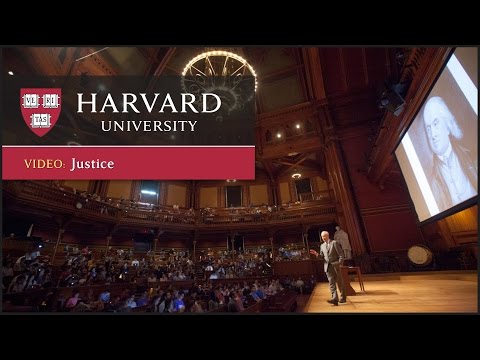
Justice · Lecture 12 of 19 · 55:11
Episode 12: Debating Same-Sex Marriage
Study guide
What this lecture covers
In this closing lecture, Sandel argues that reasoning about justice cannot be fully detached from reasoning about the good, and that this is not only unavoidable but possible without reducing justice to whatever a community happens to believe. He tests the claim with the class debate over same-sex marriage and the Massachusetts Goodridge ruling, which explicitly wrestled with whether law can stay neutral on the purpose of marriage. The lecture closes by revisiting Rawls's method of reflective equilibrium and asking how a pluralist society can respect citizens whose moral and religious convictions differ.
After watching, you should be able to explain the difference between relativist and non-relativist ways of tying justice to the good, describe how the same-sex marriage debate surfaces disagreements about the purpose of marriage, and state Sandel's final argument about why moral and religious engagement, not neutrality, may be the more honest basis for mutual respect in a pluralist society.
Key ideas
- Relativist vs. non-relativist ties to the good: justice can be tied to a community's prevailing conventions (relativist, and vulnerable to cases like segregationist tradition) or to the intrinsic worth of the ends rights serve (non-relativist).
- Unavoidability thesis: Sandel argues that arguing about justice and rights unavoidably requires arguing about the purposes and goods those rights and institutions serve.
- Teleological dispute over marriage: the same-sex marriage debate turns partly on whether the purpose (telos) of marriage is procreation, companionship, or something else.
- Liberal neutrality's limit: attempts to resolve same-sex marriage purely through autonomy and consent, without judging the purpose of marriage, run into the fact that state recognition is also a form of social honor.
- The Goodridge case: the Massachusetts court's ruling extending marriage to same-sex couples, which began with a nod to neutrality but ultimately took a stand on marriage's purpose.
- Reflective equilibrium: Rawls's method of moving back and forth between judgments about particular cases and general principles, which Sandel argues applies to disagreements about the good as well as about justice.
Walkthrough
Two ways to tie justice to the good (6:56)
Sandel returns to the Southern segregationists from the previous lecture to test whether recognizing obligations of solidarity commits us to a relativist view, where justice just means fidelity to a community's shared understandings. He distinguishes that relativist approach, which strips justice of any critical standard, from a non-relativist way of connecting justice to the good, where rights are justified by the intrinsic worth of the ends they serve. He argues the second path is more defensible, but it raises the harder question of whether it's possible to reason about the good in a pluralist society.
Opening the same-sex marriage debate (11:36)
Sandel uses same-sex marriage to test whether justice can be settled without taking a stand on the good. Students opposed to state recognition of same-sex marriage argue that marriage's purpose is bound up with procreation and the union of man and woman. Other students press this view by asking whether infertile or postmenopausal heterosexual couples should then be barred from marrying, and by raising the harder case of masturbation to probe the underlying theological argument. The exchange reveals that even opponents of same-sex marriage are implicitly relying on a claim about the purpose, or telos, of marriage and sexuality.
Civil unions, neutrality, and getting the state out of marriage (21:34)
Students propose alternative positions: that the state should recognize civil unions rather than marriage, leaving "marriage" to religious communities, or that the state should stop recognizing marriage altogether to stay fully neutral. Sandel presses whether any of these positions actually avoids taking a stand on the moral and religious questions at stake, since even choosing not to recognize marriage is itself a policy choice with consequences.
The Goodridge ruling and the limits of neutrality (32:37)
Sandel walks through the Massachusetts Goodridge decision that legalized same-sex marriage, showing how the court began with an appeal to individual autonomy and neutrality but ultimately couldn't sustain it. He contrasts this with commentator Michael Kinsley's proposal to fully "disestablish" state-recognized marriage, which would be the consistent neutral position. Because the Massachusetts court instead affirmed marriage as a publicly honored institution, Justice Marshall's opinion had to directly reject procreation as marriage's defining purpose, arguing instead that the essential point of marriage is the couple's exclusive, permanent commitment.
Reflective equilibrium and reasonable pluralism (47:22)
Sandel revisits Rawls's method of reflective equilibrium, moving back and forth between judgments about particular cases and general principles, arguing it resembles the same dialectical reasoning Aristotle used and that the class has practiced all term. He questions Rawls's claim that this method can generate shared judgments about justice while questions of the good life remain subject to irreducible, reasonable disagreement, suggesting that disagreements about justice, such as between libertarian and egalitarian theories, may be just as persistent.
Respect, disagreement, and the course's conclusion (48:43)
Sandel closes by asking how a society can respect citizens who disagree on deep moral and religious questions. He contrasts a liberal conception of respect, which sets those convictions aside for political purposes, with an alternative that engages, challenges and learns from them directly. He argues this second form of respect, though it offers no guarantee of agreement, better fits a pluralist society, and ends the course by returning to its opening theme: philosophy's task of unsettling familiar assumptions and awakening what he calls the restlessness of reason.
Before you watch
- Review the previous lecture's discussion of the narrative self and the Southern segregationists example, since this lecture directly continues that argument.
- Recall Rawls's veil of ignorance and difference principle from earlier lectures, since the closing discussion of reflective equilibrium builds on that material.
Check your understanding
- What is the difference between a relativist and a non-relativist way of tying justice to the good, and why does Sandel favor the non-relativist version?
- What objections do students raise against the claim that procreation is the defining purpose of marriage?
- Why does Sandel argue that "getting the state out of marriage" is the only fully neutral position, and why didn't the Massachusetts court adopt it?
- How does Justice Marshall's opinion in Goodridge ultimately define the essential purpose of marriage?
- What is Rawls's method of reflective equilibrium, and why does Sandel question limiting it to questions of justice rather than the good life?
Vocabulary
- detach (verb)
- To separate one thing from another.
Sandel argues justice cannot be fully detached from the good. - intrinsic worth (noun)
- The value something has in itself, not because of another purpose.
Rights are justified by the intrinsic worth of the ends they serve. - pluralist (adjective)
- Describing a society with many different beliefs and values living together.
A pluralist society must handle deep moral disagreement. - procreation (noun)
- The process of producing children.
Some argue marriage's purpose is procreation. - companionship (noun)
- A close, supportive relationship between people.
Others say marriage's purpose is companionship, not procreation. - neutrality (noun)
- The state of not favoring any particular side or belief.
The state tries to maintain neutrality on the purpose of marriage. - postmenopausal (adjective)
- Describing a woman who has passed the stage of life when she can have children.
Students ask whether postmenopausal couples should be barred from marriage. - theological (adjective)
- Relating to the study of religious belief.
The debate touches on a theological argument about sexuality. - civil union (noun)
- A legal relationship between two people, similar to marriage but without the name.
Some propose civil unions instead of state-recognized marriage. - disestablish (verb)
- To remove the official government status of an institution.
Kinsley proposed to fully disestablish state-recognized marriage. - ruling (noun)
- An official decision made by a court.
The Goodridge ruling legalized same-sex marriage in Massachusetts. - exclusive (adjective)
- Limited to only one; not shared with anyone else.
The court defined marriage by its exclusive, permanent commitment. - reflective equilibrium (noun)
- Rawls's method of adjusting general principles and specific judgments until they fit together.
Rawls's reflective equilibrium balances principles against particular cases. - dialectical (adjective)
- Relating to reasoning through back-and-forth discussion of opposing views.
This resembles the dialectical reasoning used throughout the course. - irreducible (adjective)
- Not able to be simplified or reduced to something simpler.
Some disagreements about the good remain irreducible. - restlessness (noun)
- A state of being unable to stay settled or satisfied.
Sandel ends the course by returning to the restlessness of reason. - vulnerable (adjective)
- Open to being harmed or criticized.
The relativist approach is vulnerable to the segregationist example. - critical standard (noun)
- A basis for judging something as right or wrong, beyond mere opinion.
Relativism strips justice of any critical standard. - engage (with) (verb)
- To become involved with and actively consider something.
Sandel argues we should engage with others' moral convictions. - conviction (noun)
- A firmly held belief or opinion.
Citizens hold different moral and religious convictions. - unsettle (verb)
- To disturb the calm or stability of something.
Philosophy works by unsettling familiar assumptions. - commentator (noun)
- A person who gives opinions or analysis on current events.
A commentator proposed removing the state from marriage entirely.
Chapters
- 0:00 <Untitled Chapter 1>
- 6:56 Consequences for Justice
- 8:19 Tying Justice to the Good
- 10:13 How Can We Reason about the Good
- 11:02 Is It Unavoidable When Arguing about Justice To Argue about the Good
- 11:36 Discussion of Same-Sex Marriage
- 15:00 The Government Should Not Encourage Homosexual Behavior by Conferring the Recognition of Marriage
- 16:05 Have You Ever Engaged in Masturbation
- 20:21 Consensual Polygamous Marriages
- 21:34 Do You Think the State Should Recognize Same-Sex Marriage or Just Same-Sex Civil Unions as Something Short of Marriage
- 39:19 Primary Purpose of Marriage Is Procreation
- 47:22 Is There any Difference between the Fact of Reasonable Pluralism in the Case of Justice and Rights and in the Case of Morality
- 48:43 How Are We Ever Going To Find Our Way to a Society That Accords Respect to Fellow Citizens with Whom We Disagree
From the YouTube description
To register for the 2015 course, visit https://www.edx.org/course/justice-harvardx-er22-1x-0.
PART ONE: DEBATING SAME-SEX MARRIAGE
If principles of justice depend on the moral or intrinsic worth of the ends that rights serve, how should we deal with the fact that people hold different ideas and conceptions of what is good? Students address this question in a heated debate about same-sex marriage. Should same-sex marriage be legal? Can we settle the matter without discussing the moral permissibility of homosexuality or the purpose of marriage?
PART TWO: THE GOOD LIFE
Professor Sandel raises two questions. Is it necessary to reason about the good life in order to decide what rights people have and what is just? If so, how is it possible to argue about the nature of the good life? Students explore these questions with a discussion about the relation of law and morality, as played out in public controversies over same-sex marriage and abortion. Michael Sandel concludes his lecture series by making the point that, in many cases, the law cant be neutral on hard moral questions. Engaging rather than avoiding the moral convictions of our fellow citizens may be the best way of seeking a just society.
← Episode 11: The Claims of Community · Bioethics: Designer Children →